Get Full Government Meeting Transcripts, Videos, & Alerts Forever!
Get email alerts on the Public Safety Data topic
No spam. Unsubscribe anytime.
Troutdale advisory committee flags gaps between sheriff dispatch logs and county dashboard, asks for analyst briefing
Summary
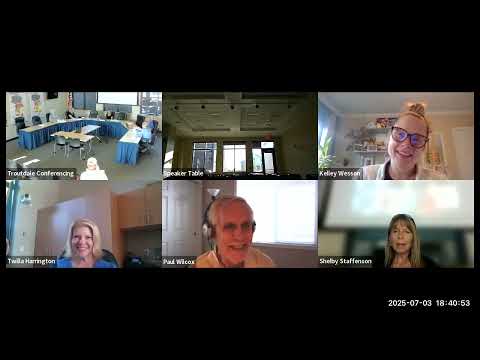
The Troutdale Public Safety and Equity Advisory Committee voted to reappoint two members to a working group and spent most of its July 3 meeting reviewing a voluminous Multnomah County calls-for-service packet. Members found large mismatches with the county’s public dashboard, requested the sheriff’s captain return and asked that a county data analyst appear at the next meeting.
Troutdale’s Public Safety and Equity Advisory Committee on July 3 focused much of its meeting on a newly enlarged packet of law-enforcement call logs and what members described as unexplained differences between that packet and the Multnomah County public crime dashboard.
Chair Shelby told the committee the packet — a compilation of Bureau of Emergency Communication dispatch logs and county records — had grown from a few pages to roughly a hundred, with all filters removed so members could see every logged call. “We want to see what we really need to see,” Shelby said, describing the packet as a starting point for deciding which data fields the committee should keep or filter.
Mary Howe, who the committee identified as having records experience, said the sources are not identical and that not every dispatch entry results in a written officer report. “I added it. It was, like, 518 calls. But yet online, they only showed 43,” Howe said, illustrating the gap the group wants reconciled.
Members and several newcomers asked for clearer documentation of how incidents are coded and how jurisdictional lines are applied — for example, whether an incident that starts in one city and ends in Troutdale appears in Troutdale statistics. Twila and other committee members suggested that some categories tracked in the packet (such as targeted patrols or premise checks) would not appear on summary dashboards because they may not be reportable crimes.
To resolve the differences, the committee agreed to compile a set of specific questions and ask staff to invite the Multnomah County sheriff’s captain to return and to arrange for a county data analyst to attend the September meeting. Twila asked that a member who has used the county’s public heat map demonstrate how to toggle filters at the next meeting so the group can compare views.
The committee did not change policy at the session; members said the packet should remain unfiltered while they determine which fields are useful for oversight and public reporting. They encouraged staff to continue emailing electronic packets in advance and to print a small number of hard copies that members can pick up at city hall.
Next steps: staff will assemble committee questions for the sheriff’s captain and attempt to schedule a county data analyst for the Sept. 4 meeting.