
House Commerce & Economic Development Committee hears broad support for limiting noncompete agreements in H.205
Get AI-powered insights, summaries, and transcripts
Subscribe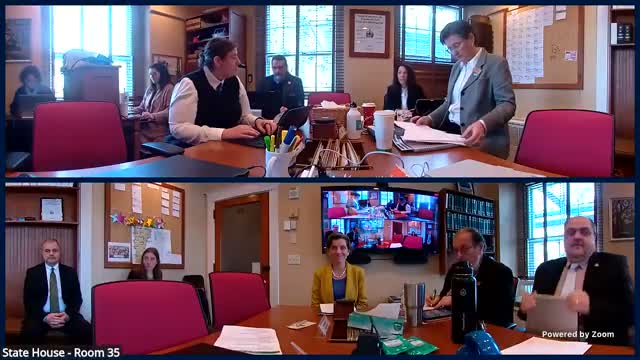
Summary
At a Jan. 28 hearing on H.205, health‑care, labor, banking and business representatives and a chiropractor urged narrower use of noncompete clauses, debated a $100,000 salary threshold and sought clearer definitions for 'executive' status, nonsolicitation notices and proration of stay‑or‑pay agreements.
MONTPELIER — The Vermont House Commerce & Economic Development Committee on Wednesday heard several hours of testimony on H.205, a bill that would limit employers’ use of covenants not to compete. Witnesses from health‑care, labor and business groups expressed broad support for curbing noncompetes while disagreeing about how narrowly to define exemptions.
Jessa Barnard, executive director of the Vermont Medical Society, told the committee she supports restricting noncompetes "to the maximum extent possible," arguing they reduce clinicians’ mobility and patients’ access to care, especially in rural areas. Barnard said the draft’s executive‑employee exception is a reasonable starting point but urged clearer statutory language about who qualifies as an executive and stronger nonsolicitation notice rules so patients can learn where a provider has moved.
David Mickenberg of Working Vermont, the state’s largest coalition of labor unions, urged a broad approach and cited national estimates that about 30 million Americans (roughly 18% of the workforce) are subject to noncompetes. He referenced Federal Trade Commission estimates that a ban could raise new business formation, modestly increase average worker earnings and reduce health‑care costs over time. Mickenberg recommended considering a higher income threshold (near the FTC’s ~$151,000 figure) and adding enforcement tools such as liquidated‑damages penalties and workplace posting requirements to inform job applicants of their rights.
Kristelia, president of the Vermont Bankers Association, and Austin Davis of the Lake Champlain Chamber supported the bill’s goal but warned that overly vague language could create uncertainty. Kristelia asked for clearer definitions of severance and retaliation and flagged possible unintended effects on deferred‑compensation and severance arrangements. Davis urged the committee to protect startups — recommending the statute use a salary threshold OR a demonstrated connection to proprietary or strategic information rather than relying only on an executive‑employee test.
The committee also heard a personal account from Sarah Crandall, a chiropractor from Hardwick, who said she signed a three‑year contract with a 30‑mile, two‑year noncompete after graduating. Crandall said the clause effectively prevented her from practicing near home, that legal help to challenge the agreement was prohibitively expensive, and that patients in her rural region lost access to care while the clinic she left has struggled to stay open.
Members focused their questions on technical choices: whether to adopt a single wage floor (the draft uses $100,000), whether to require an additional "critical employee" or proprietary‑information test, how to define ‘‘executive,’’ and whether any change should apply retroactively to existing contracts. Witnesses repeatedly encouraged the committee to add precise guardrails for nonsolicitation notices and to clarify proration rules for "stay‑or‑pay" training repayment so that repayment formulas reflect how training value accrues.
No formal votes were taken. Committee members said staff and sponsor lawmakers will reconcile language between H.205 and a separate House Health Committee draft that includes a health‑care–specific ban, and will return to the bill later for additional drafting and review.
The committee is scheduled to resume consideration of bill language later in the day.