Get Full Government Meeting Transcripts, Videos, & Alerts Forever!
Get email alerts on the Revenue Forecast topic
No spam. Unsubscribe anytime.
Consultant projects $20.5M in new ad valorem growth by 2030; council warns pending state bills could shrink local tax base
Summary
A spatialized growth model shows new residential and commercial development could add about $20.5 million in ad valorem revenue by 2030 (in 2025 dollars); councilors and staff warned that pending state legislation to cap assessed-value growth or change ad valorem rules could substantially alter those projections.
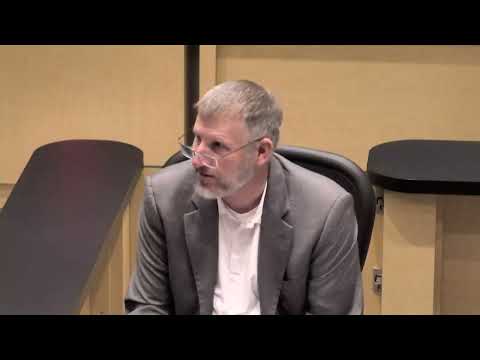
David Farmer, the consultant who mapped 462 growth zones across Cape Coral, told council the city can reasonably expect meaningful new-growth ad valorem revenue from residential and commercial development over the coming decade. Farmer—stimated roughly $20.5 million in additional ad valorem revenue by 2030 (in 2025 dollars) and roughly $66.5million by 2045, holding millage steady for modeling purposes.
Farmer said his model is conservative in several respects: it holds the city's millage constant at the 2025 level for illustrative comparability and assumes many new housing units will be homesteaded (which depresses taxable value growth relative to non-homesteaded properties). He also excluded one-time impact and mobility fees from the revenue tallies so the numbers reflect recurring property-tax revenue.
Assistant City Manager Mark Mason and staff flagged a second major uncertainty: several bills in the Florida Legislature could change how property taxes are levied or how much assessed value can be recognized year to year. Mason named House Joint Resolutions 203 and 213 as active and referenced newer measures including HB 789 and HJR 903 (the latter would lower the maximum assessed-value growth for non-homesteaded properties from 10% to 3% in the sponsor's version). The city is evaluating downstream impacts, including possible reductions in intergovernmental grant flows that depend on property-tax revenue.
Councilors asked staff to quantify near-term and multi-year revenue scenarios and to show how projected new-growth revenue compares with the recurring personnel and capital asks identified by police and fire. Staff said they can layer the consultant—igures with the city's AMP and operating forecasts to show the net position across multiple scenarios.
Next steps: staff will provide scenario analyses that combine Farmer's growth projections with policy choices (millage settings, FSA adjustments, impact-fee assumptions) and identify the fiscal gap to cover prioritized public-safety and capital needs.