Get Full Government Meeting Transcripts, Videos, & Alerts Forever!
Get email alerts on the Youth Programs topic
No spam. Unsubscribe anytime.
Stockton council extends youth employment grants, funds to create 261 positions
Summary
Council approved extensions of earlier youth work development grants that together fund 261 positions across three providers; staff said about 65–70% of funds go to wages, administrative costs run about 20–25%, and the city program rate is $23/hour while partners will pay closer to minimum wage.
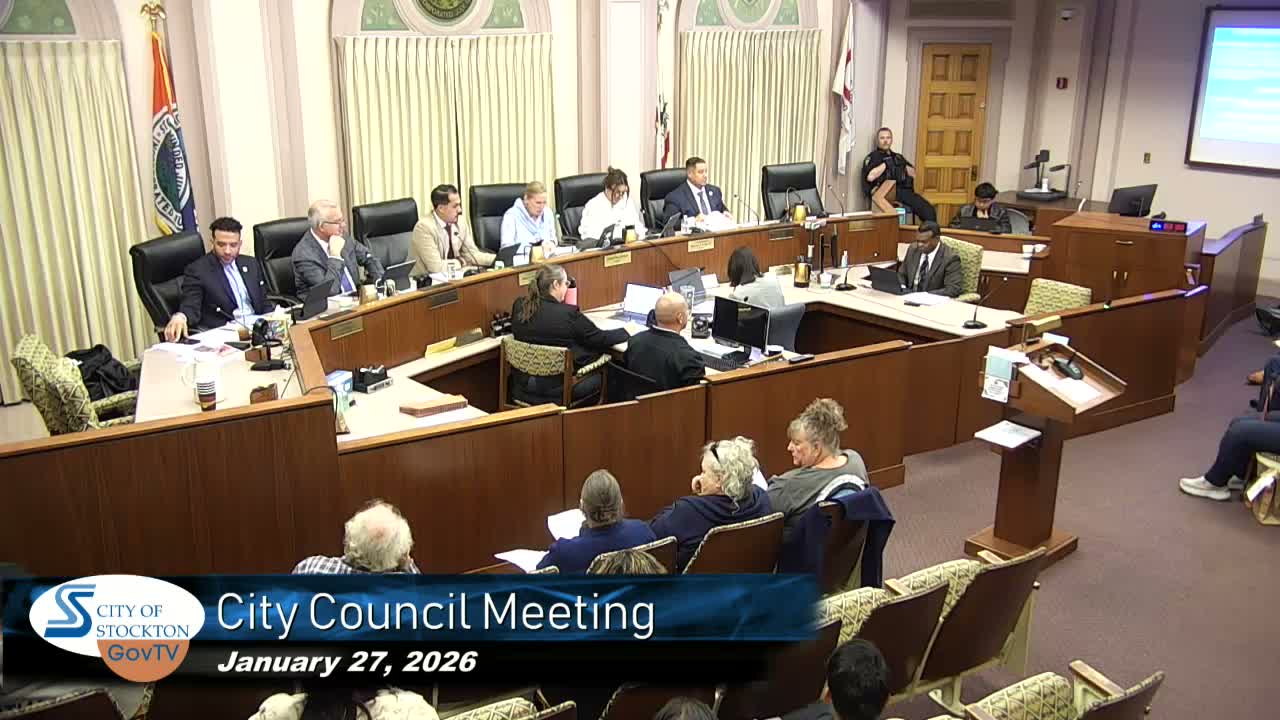
The Stockton City Council unanimously approved extensions for existing youth-employment grants on Jan. 27, expanding summer and transitional‑age work opportunities after staff described program performance and oversight procedures.
Staff said the original subgrantee selection had been competitive in prior procurement; the current action extends those existing contracts rather than conducting a new competition. The three funded components are Greater Valley Conservation Corps (about 95 funded positions), Main Street Youth and Family Services (60 funded positions) and the city’s program (approximately 106 funded positions), totaling 261 funded positions. Staff clarified those numbers are funded "positions" (vacancies may be filled sequentially so the actual number of people served could be slightly higher than 261 over time).
On program costs, staff provided a high‑level allocation: roughly 65% of grant dollars go directly to participant wages (with wraparound services raising that share toward ~70% for some programs) and administrative costs typically run about 20–25%, subject to program needs. The city’s internal program pays participants about $23 per hour; staff said partner pay rates varied and that more precise partner wage data would be returned to council.
Councilmembers pressed staff about safeguards and monitoring. Staff described monthly progress reports and invoice review, state oversight of the grant extension, reporting requirements for participant eligibility targets mandated by the grant, and an annual/impact report after the summer program that council will receive (typically in August).
The council voted 6‑0 to approve the extensions; staff committed to provide a more detailed breakdown by program that specifies wage levels, administrative costs and program deliverables.