
Education officials and VASBO push Vermont to adopt clearer guidance on school reserve funds
Get AI-powered insights, summaries, and transcripts
Subscribe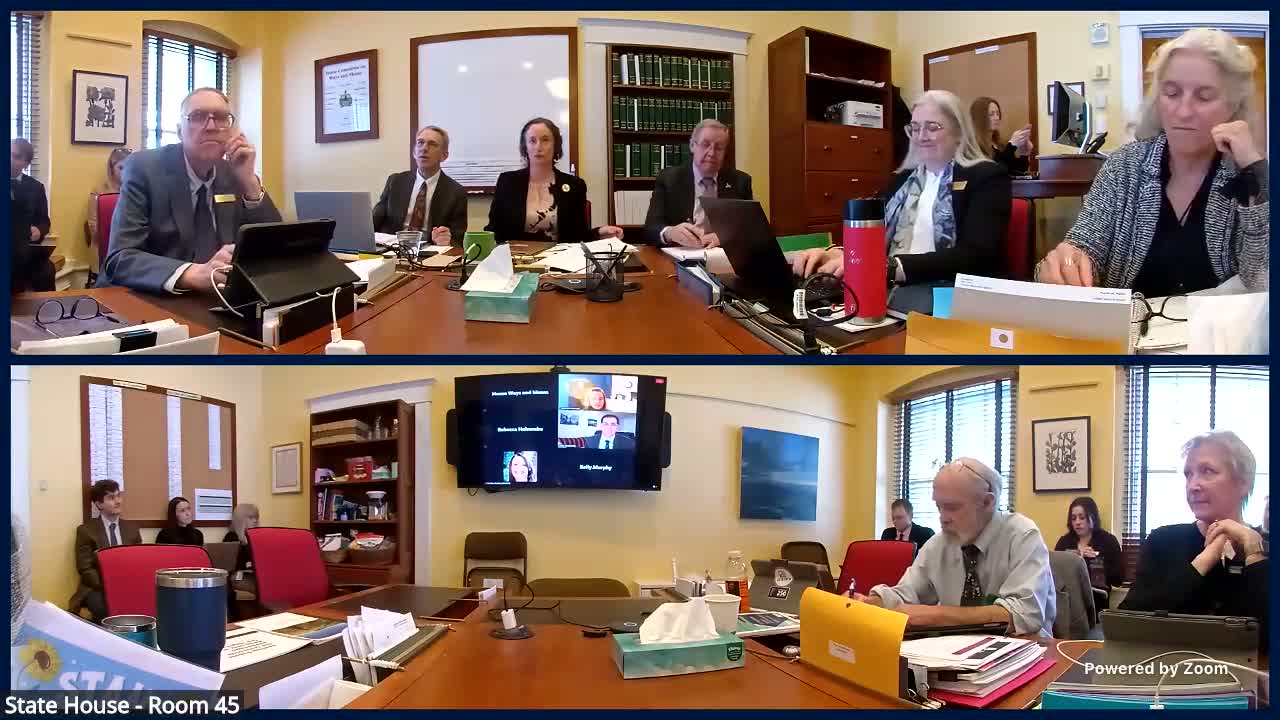
Summary
Witnesses told the Ways & Means Committee that clearer statewide guidance — not a statutory mandate — would help districts manage working capital and avoid inequities as Vermont moves toward a foundation formula and the Agency of Education begins rulemaking under Act 183.
Chris Duncombe, principal with the Education Commission of the States, told the Ways & Means Committee on Jan. 29 that state policies on local education agency fund balances vary widely and that most states set maximums while offering only guidance on minimum reserves. "The Government Finance Officers Association recommends a policy of maintaining a fund balance of no less than two months of regular general fund operating revenues," Duncombe said, citing the 2‑month (about 16.7%) GFOA floor as a common benchmark.
Representatives from the Vermont Association of School Business Officials urged the committee to ask the legislature to direct the Agency of Education to develop nonstatutory guidance tailored to local circumstances. "Fund balance is often misunderstood as excess or unused money in practice. It functions as working capital and financial insurance," said Elizabeth, president of VASBO, arguing that guidance could establish a baseline range grounded in national best practices without imposing a one‑size‑fits‑all requirement.
VASBO speakers and other witnesses noted that reserve balances serve multiple legitimate functions — cash‑flow management, one‑time costs such as special‑education placements or facility emergencies, and reducing reliance on tax anticipation notes — and that labeling or restricting reserves (for example, as capital only) can create inequities between districts able to win voter approval for special articles and those that cannot. "Reserves function best when they are governed by a formal policy that clearly defines the purpose of the reserves, the conditions for their use, the expectations for replenishment when reserves are drawn down," a VASBO witness said.
Duncombe cautioned that large, persistent unreserved balances can also signal forecasting error (overestimated expenses or underestimated revenues) and that states differ in enforcement: New York directs districts to lower property tax levies when they exceed the limit, while other states reduce state aid or have no direct financial penalty. He highlighted examples across the country — state maximums range from 4% in New York to 48% in Oklahoma — and said California adopts regulation‑based minimums that vary by district size.
Committee members pressed for practical follow‑up: several asked the Agency of Education to return with options for guidance, better standardized data collection tied to audits, and training for school business officials. No statutory changes or votes were taken; witnesses and members emphasized doing further work to shape the agency’s rulemaking under Section 7 of Act 183 rather than immediately imposing a statutory cap or mandate.
The committee plans additional testimony from school business managers, superintendents and school‑board chairs to inform any guidance or rules the Agency may develop.