Get Full Government Meeting Transcripts, Videos, & Alerts Forever!
Get email alerts on the Entertainment Zones topic
No spam. Unsubscribe anytime.
Santa Rosa council backs staff to draft entertainment‑zone ordinance, favors pilot program
Summary
City staff proposed downtown, Railroad Square and event‑specific entertainment zones allowing outdoor alcohol consumption under state law; police data showed limited alcohol‑related arrests in the proposed hours, and council members broadly supported a pilot Fri–Sun activation with a management plan and law‑enforcement coordination.
Santa Rosa City Council on Tuesday directed staff to draft an ordinance and management plan for pilot “entertainment zones” in parts of downtown and Railroad Square, after a staff presentation and a long public comment period on how to balance nightlife, safety and neighborhood impacts.
City planning staff presented a vision for three possible zones — Courthouse Square, Railroad Square and a station‑area zone activated for signature events — and recommended a two‑step approach: adopt a broad ordinance to establish boundaries, days and permitted containers, then use a more detailed management plan to set operational rules. “The ordinance sets the days, hours, and boundaries … and the management plan has the authority to further regulate the entertainment zone,” staffer Sachinor Bisla said during the study session.
Bisla said the proposal is tied to a recent state law (transcribed in the presentation as “California senate bill 9 6 9”), which requires consultation with law enforcement and annual reporting. Staff proposed typical hours of 12 p.m. to 10 p.m. Friday through Sunday for regularly recurring activations, with event‑only activation for larger gatherings. Management ideas included wristbands to verify age and reusable or recyclable cups consistent with the city’s zero‑waste rules.
Police presented data intended to help the council weigh public‑safety tradeoffs. “In 2025, we responded to 5,095 calls that would be in the Entertainment District … of those, we have only made 499 arrests,” Lt. Chris Mahurin said, and when narrowed to the proposed Thursday–Sunday, noon–10 p.m. window the department saw 1,384 calls and 106 arrests in that period. Mahurin acknowledged staffing limits for weekend enforcement and said downtown enforcement resources are constrained; he pointed to grants and the downtown enforcement team as partial mitigations.
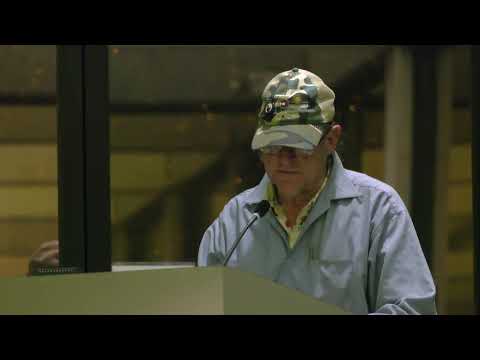
Public commenters were split but many supported a measured pilot. AJ Trombetta, representing a Railroad Square property owner, urged partnering with business groups and suggested checkpoints to reduce DUIs. Abby Arnold of Santa Rosa YIMBY said the Wednesday night market already shows outdoor alcohol can be managed and urged regular weekly activation rather than event‑only activation. Conversely, Gregory Faren, who works in behavioral health, warned that expanded outdoor alcohol could increase substance‑use and behavioral‑health needs and urged close city–county coordination.
Councilmembers expressed general enthusiasm for a pilot approach that balances vibrancy with enforcement and neighborhood impacts. “I think we ought to have a pilot, but I think we ought to go for the full three‑day period,” Councilmember Fleming said, arguing consistency helps set community norms. Several members urged staff to return with recommended boundaries, specific hours, enforcement resource estimates and an evaluation timeline.
Mayor Stapp closed by asking staff to use the presentations and community input to draft an ordinance and a management plan that would allow the council to consider a pilot and potential biennial review, as required under state rules.
Next steps: staff will draft an ordinance and management plan for council review, provide more comparative data on enforcement impacts and recommend a pilot timeline and evaluation metrics.