
Rowan County approves rooftop-commercial solar in airport overlay with glare and maintenance rules
Get AI-powered insights, summaries, and transcripts
Sign Up Free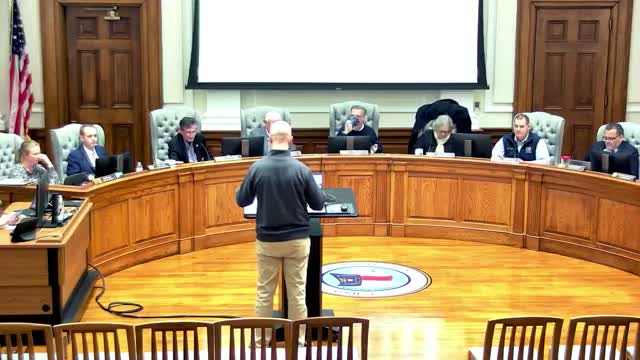
Summary
The Rowan County Board of Commissioners approved zoning text amendment ZTA02-225 to allow nonresidential rooftop solar in the Mid Carolina Regional Airport overlay, imposing anti-reflective coating, a 2% reflectivity threshold, SGHAT glare analysis for larger systems, PE certifications and five-year testing and corrective requirements.
Rowan County commissioners on Jan. 20 approved ZTA02-225, a zoning text amendment permitting rooftop solar on nonresidential buildings within the county's airport-zone overlay, subject to new glare, testing and maintenance requirements.
The amendment allows rooftop solar for nonresidential uses in the airport zone if panels carry manufacturer anti-reflective (AR) coating. For systems exceeding 6,000 square feet, applicants must submit a Solar Glare Hazard Analysis Tool (SGHAT) study or equivalent demonstrating low glare risk, a North Carolina-registered professional engineer (PE) concurrence on study inputs, and manufacturer model data showing the panel system will have less than 2% reflectivity. The ordinance also requires a post-construction PE certification and periodic testing every five years; if reflectivity exceeds the threshold, owners must repair, replace or otherwise correct the condition.
Shane, planning staff presenting the item, said the changes follow an extended review and a Feb. 2024 amendment that already allowed residential rooftop solar under 6,000 square feet with AR coating. "They're committing to that as part of their operational plan," Shane said, describing the five-year testing cycle and complaint-driven compliance mechanism.
Alex Hachloff of PPM Solar, the applicant's representative, told the board panel technology and manufacturing warranties now make anti-reflective performance more durable. "This is the strictest, most comprehensive policy that we've ever seen," Hachloff said, adding his company supports making projects available to local businesses while relying on manufacturer warranties and industry recycling capacity for end-of-life panels.
Commissioners voiced questions about enforcement, long-term panel degradation and whether large rooftop systems could be used to sell power to utilities. Shane said staff will use periodic inspections and complaint procedures to enforce reflectivity limits. Hachloff said the systems described are designed to offset on-site consumption and that utilities such as Duke Energy manage interconnection and oversizing policies.
Unidentified Speaker 1 read a finding of reasonableness and moved approval of ZTA02-225; the motion was seconded and approved by voice vote with no opposition recorded.
What this means: Commercial rooftops in the airport-overlay area can now host solar installations if they meet the ordinance's glare, engineering and maintenance requirements. Systems larger than 6,000 square feet face additional study and certification obligations before receiving county approval.
Next steps: The amendment takes effect under the county's standard adoption process; applicants seeking to use the new pathway must submit the required studies and PE certifications as part of any permitting application.