Columbus Water & Power proposes $951 million 2026 budget; billing system, dewatering contracts and a $30M LED plan are central
Loading...
Summary
Deputy Director John Lee told council the Columbus Water & Power 2026 operating budget totals about $951 million, driven by operations, debt service and large contracts; staff flagged a $14 million customer-billing implementation, $28.2 million dewatering contract, and an estimated $30 million LED streetlight modernization project while expanding affordability programs.
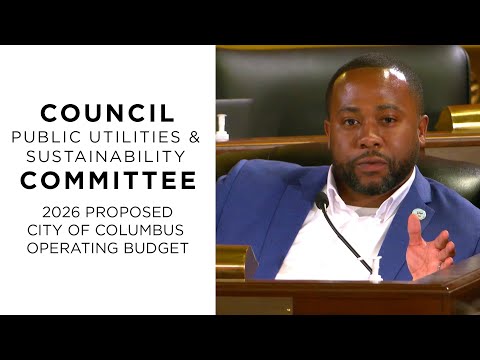
Deputy Director John Lee presented Columbus Water and Power's proposed 2026 operating budget to the Public Utilities & Sustainability Committee, saying the package balances regional growth, reliability and customer affordability while reflecting increases in operations and debt service.
Lee said the utility's 2026 operating budget represents a 9.7% increase over 2025 and cited drivers that include operations and maintenance, debt-service costs for capital investments and professional services contracts. He told the committee the total proposed operating budget across the utility is approximately $951,000,000.
Major expenditures and programs: Lee identified several large, explicit budget items: about $14,000,000 allocated to implement a new customer billing system; an approximately $28,200,000 dewatering and lagoon-cleaning contract tied to water-residual management; and an estimated $30,000,000 LED streetlight modernization to convert high-pressure sodium fixtures to LED with a mesh network for monitoring and faster outage response.
Debt, growth and rates: Lee said the utility uses lower-cost borrowing tools where eligible, including coordination with the Ohio Water Development Authority and Ohio EPA, and that some projects must still go to municipal bond markets. He described a multi-year capital program (including a fourth water plant) to meet projected regional growth through 2033 and said staff model borrowing to protect customer affordability. Lee also said the department will expand a discount program that offers qualifying customers up to a 30% bill reduction and that staff are building out an engagement team to increase enrollment.
Sustainable Columbus and workforce partnerships: Deputy Director Madison Hill summarized the Sustainable Columbus budget and said climate-action investments are split between a city general-fund component and a Columbus Water and Power sustainability office. Hill highlighted programs such as workforce cohorts (the —empowered— program), energy-efficiency appliance initiatives and expanded weatherization assistance; she said the larger sustainability budget also captures solar purchase-power agreements and LED conversions.
Public testimony: Wendy Tarr, executive director of ARCH (Accompanying Returning Citizens with Hope), spoke during public comment about a solar-installation training program the nonprofit runs with Sustainable Columbus support and asked the committee to consider gap funding to sustain the program. Tarr said trainees earn credentials and described one graduate who secured a utility-scale solar job at a prevailing wage nearly immediately after release from prison.
What happens next: council members asked for more detail about debt management, the fourth water plant timeline and affordability outreach; staff said they will return with additional briefings as the budget process moves forward.
Sources: presentation and Q&A with John Lee (Deputy Director, Columbus Water and Power); Madison Hill (Deputy Director, Sustainable Columbus); testimony from Wendy Tarr (Executive Director, ARCH).