City hears details of Department of Public Service's 2026 refuse budget; centers, recycling and anti-dump investments highlighted
Get AI-powered insights, summaries, and transcripts
SubscribeSummary
City staff told the Public Utilities & Sustainability Committee the Department of Public Service proposes targeted funding for convenience centers, illegal-dump response and weekly curbside recycling as part of a departmentwide $178.9 million operating budget; officials said the measures reduce illegal dumping and support recycling growth.
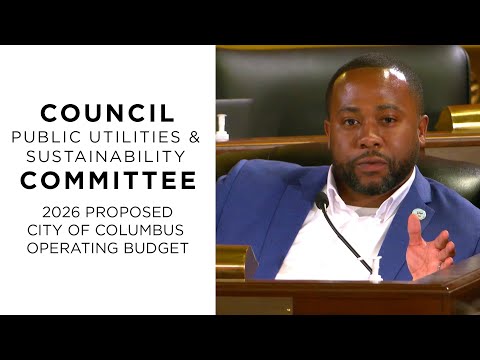
The Public Utilities & Sustainability Committee on Monday reviewed the Department of Public Service's proposed 2026 operating budget, with officials emphasizing investments to reduce illegal dumping and expand recycling.
Deputy Director Andrea Wasek told the committee the department is proposing a $178,900,000 operating budget for 2026 and that refuse services are supported by a $37,800,000 general fund. She said refuse operations support 184 full-time staff and provide weekly refuse and recycling service to more than 344,000 households across the city.
Why it matters: the presentation framed several smaller, operational changes as drivers of neighborhood outcomes. Wasek and Administrator Tim Swager said funding in the proposed budget maintains weekly curbside recycling and expands enforcement and cleanup efforts aimed at illegal dumping, while convenience centers give residents alternatives to dumping bulky items in alleys.
Officials' account: Swager described two no-cost waste-and-reuse convenience centers at Alum Creek and Georgesville and said the sites had more than 17,000 users last year. —They allow us to divert a ton of waste from the landfill,— he said, and staff told the committee that the centers have contributed to a notable drop in scheduled bulk pickup demand and illegal dumping.
Wasek detailed line items that support anti-dumping and litter work: roughly $2.2 million for illegal-dump addressing under the Clean Neighborhoods Initiative (16 dedicated staff) and about $1.9 million for a proactive litter response team. She said crews removed nearly 3,000 tons of illegally dumped debris in 2025 and that Keep Columbus Beautiful partnered with volunteers for hundreds of cleanup events.
Recycling and pilots: presenters described curbside weekly recycling and efforts to expand accepted materials at the curb. The city is continuing a multifamily recycling pilot with partner Swayco; staff said the pilot faces site-space constraints at some apartment complexes and resident contamination risks but has otherwise produced good material quality. Swager said the current contract with hauler Rumpke is funded in the 2026 budget and is in its final year.
Operational changes: council members asked about the earlier conversion from shared 300-gallon containers to 90-gallon household containers. Swager said the smaller containers cost less to maintain, reduced alley litter and damage claims, and that route efficiencies from standardized trucks offset the need to collect a larger number of individual containers.
What happens next: committee members asked for follow-up information on multifamily pilot expansion and convenience-center siting; staff will return in subsequent hearings as the council advances the overall mayoral budget.
Sources: presentation and answers to council questions from Andrea Wasek (Deputy Director, Department of Public Service) and Tim Swager (administrator).