
Upper Dublin technology leader urges independent infrastructure audit, tighter identity controls and device realignment
Get AI-powered insights, summaries, and transcripts
Subscribe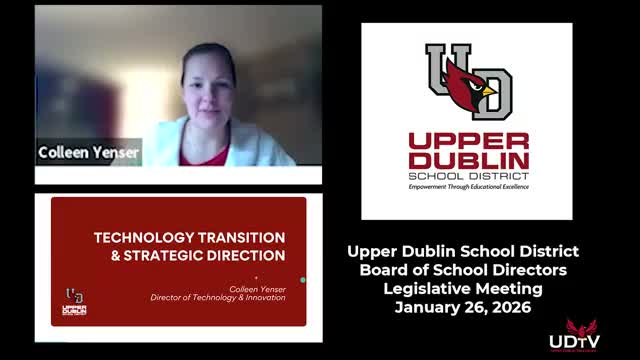
Summary
At the Jan. 26 board meeting, the district’s technology lead presented a technology transition audit recommending an independent infrastructure audit, stronger identity and access controls, an asset inventory and a shift to a grades 1/5/9 1:1 device model. Administration accepted recommendations for further study.
At the Jan. 26 Upper Dublin School District board meeting, the district technology leader (presented in materials as Miss Yentzer) summarized findings from a technology transition audit and asked the board to authorize an independent infrastructure audit.
Miss Yentzer told the board she used stakeholder interviews, document review and system testing to assess technology organizational management and services. She said the audit identified strengths — including a mature 1:1 student device program — and gaps in internal procedures, asset visibility and cybersecurity practices. "I primarily did this through stakeholder conversations from multiple stakeholders from across the district," she said in the presentation.
Her short‑term recommendations (to be implemented within the current fiscal year) included: strengthening identity and access management, automating account life cycles and instituting role‑based security and multifactor authentication; improving asset management and formally documenting device lifecycles; and conducting an applications review to better leverage existing systems. She asked the board to place an independent K–12 infrastructure audit on the agenda so an outside expert can assess current conditions and provide modernization planning.
For the longer term (six months to two years), Miss Yentzer outlined seven objectives including comprehensive district‑wide asset inventory and life‑cycle planning, infrastructure modernization planning based on the recommended audit, application optimization, and a district technology strategic plan that aligns fiscal planning with technology projects. She also recommended a change to the student device distribution model from the current grade assignment pattern to a grades 1/5/9 model to extend device lifecycles and reduce labor costs.
Superintendent Dr. Smith thanked Miss Yentzer for the work and supported tabling the board appreciation item so students may attend in person at a future meeting. Board members did not ask follow‑up questions and the presentation concluded with the district indicating next steps would include placing an infrastructure audit request on the board agenda.
Why this matters: the recommendations focus on cybersecurity safeguards, predictable device replacement budgeting and clearer staff roles — areas the presenter said would reduce operational risk and enable more proactive rather than reactive technology support across the district.
The board did not take a final vote on the infrastructure audit during the meeting; the presentation was placed into the record for committee and future board action.