
Bolton officials weigh up to six referenda, primaries and high election costs in next fiscal budget
Get AI-powered insights, summaries, and transcripts
Subscribe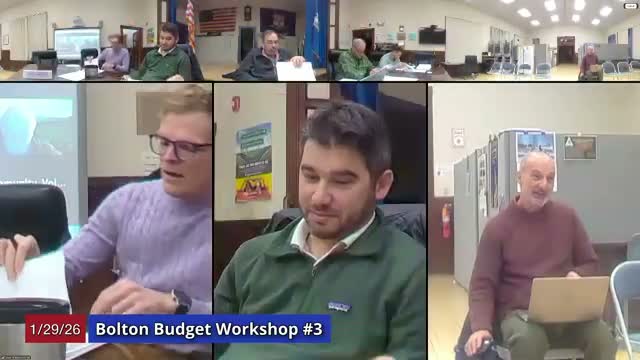
Summary
Bolton registrars and the finance committee briefed the Board of Selectmen on an elections budget that assumes up to six referenda and possible primaries, with early-voting statutes, recounts and staffing needs driving costs and prompting proposals to trim hours or publish a detailed cost spreadsheet.
The Board of Selectmen heard a detailed briefing on the town’s elections budget on Jan. 29, during which registrars and Finance Committee Chair Ross Lally described planning for up to six referenda and the possibility of state primaries that could substantially raise staffing and recount costs.
Lally said the budget currently assumes the maximum exposure: "The budget number that we put in is the maximum," and the referenda request is itemized on a spreadsheet that will be provided to the board. He added that public feedback and the committee’s desire to improve outreach motivated a small advertising placeholder in the finance budget so residents better understand election locations and schedules.
Why it matters: Each referendum can cost about $5,000–$6,000, the registrars said, so budgeting for six referenda could add roughly $30,000–$36,000. Primaries can increase the count of distinct ballots and staff needs — potentially doubling costs in some instances — because different districts may require separate polling locations and staff on the same day.
The registrars highlighted statutory early-voting requirements: "It's in perpetuity by statute," a registrar said, noting primary early voting can require seven days and general-election early voting up to 14 days. Those extended schedules increase staffing hours and related costs for setup, takedown and reconciliation.
Board members and registrars discussed options to manage costs. One approach under consideration is reducing polling hours for individual referenda; Lally estimated a reduced-hours schedule could save on the order of $10,000–$15,000 annually if fewer staff-hours are needed. Any change to hours would still need to comply with state law and be coordinated with the registrars.
Registrars committed to providing the board with a full, itemized spreadsheet showing the cost of each election — ballots, staffing, food for poll workers, and potential recount or audit contingencies — to help the Selectmen decide whether to trim referenda or adjust hours before the budget is finalized.
Next steps: The registrars will send the spreadsheet to the town clerk and the Board of Selectmen. The board also asked staff to propose polling-location schedules and to improve public notices so voters know where to go on election day.