Lifetime Citizen Portal Access — AI Briefings, Alerts & Unlimited Follows
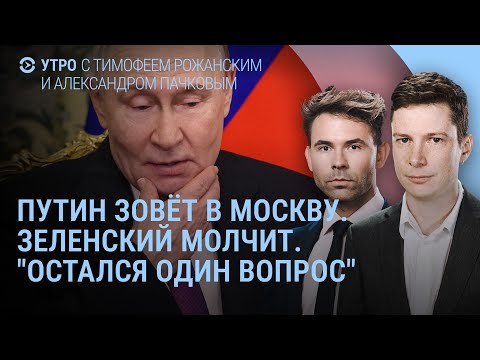
U.S. Senator Rubio says negotiators have "one question" left as Kremlin invites Zelensky to Moscow; analyst calls invitation "trolling"
Loading...
Summary
U.S. Senator Marco Rubio told a news program negotiators had narrowed differences with Russia to a single territorial issue. The Kremlins public invitation for President Volodymyr Zelensky to visit Moscow drew skepticism from political scientist Ivan Preobrazhensky, who called the offer a show of force rather than a genuine opening.
U.S. Senator Marco Rubio said negotiators had narrowed unresolved issues between Kyiv and Moscow to "one question" — territorial claims, particularly around Donetsk — and that proposed security guarantees under discussion could include a small contingent of European troops backed by U.S. support. The comment was read and discussed on the January 29 broadcast of the Russian-language morning program "Утро на канале Настоящее время."
The program reported that Kremlin aide Yuri Ushakov had publicly invited President Volodymyr Zelensky to Moscow and said such a meeting would require careful preparation. Hosts noted that Zelensky previously said he would not travel to Russia while the war continues and that, at the time of the broadcast, the Ukrainian presidential office had not responded to the invitation.
Ivan Preobrazhensky, introduced on the program as a political scientist, told the hosts he viewed the Kremlins invitation as "trolling" and a demonstration of power rather than a sincere step toward settlement. "This is pure trolling," he said, arguing that a Ukrainian leader would be unlikely to travel to Russia under current conditions and that guarantees written on paper would be judged by the balance of forces on the ground, not only by text.
The hosts also cited media reports and official statements: the program referenced Reuters reporting on negotiation sources and a Financial Times story about alleged U.S. pressure; the White House had denied one FT characterization, which the hosts noted. The broadcast repeated that Ukrainian President Volodymyr Zelensky said a security document was ready and would need ratification by the U.S. Congress and the Ukrainian parliament, but did not disclose the documents contents.
Why it matters: Any agreement that hinges on territorial concessions would be politically and legally consequential for Ukraine and would require domestic ratification steps. Claims about what U.S. officials support or would permit were presented on the program as statements and analyses rather than settled policy.
What remains unclear: The program quoted Senator Rubio and analysts and cited press reports, but the substance of the security guarantees described as "ready" by President Zelensky was not published on air, and the Kremlin invitation had not produced a public Ukrainian response at the time of broadcast.
The program closed the segment by previewing a planned bilateral meeting in Abu Dhabi between Russian and Ukrainian delegations; guests on air warned that bilateral talks can signal movement on positions but cautioned they may also reflect pressure that could lead to concessions.