Get Full Government Meeting Transcripts, Videos, & Alerts Forever!
Get email alerts on the County Charter topic
No spam. Unsubscribe anytime.
Kern County board advances measure to ask voters whether county should adopt charter giving local control over supervisor vacancies
Summary
The Kern County Board of Supervisors voted to place a proposed county charter on the June 2, 2026 ballot that would let the local board appoint interim supervisors or call special elections to fill vacancies; proponents said it preserves voter rights and speeds representation, while opponents warned it concentrates power and lacks public process.
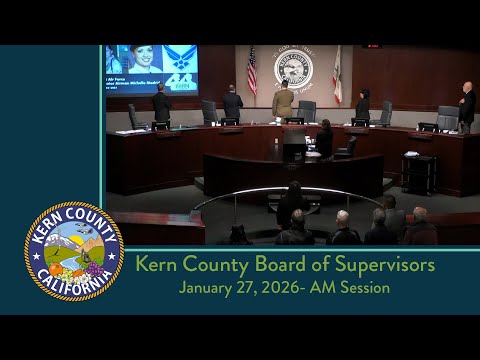
Kern County officials on Tuesday moved to place a proposed county charter before voters that would change how vacancies on the five-member Board of Supervisors are filled.
County Counsel Kendra Graham told the board the draft ordinance, modeled on the Shasta County charter, would permit the board to “appoint or call for a special election to fill a vacancy on the board of supervisors,” rather than relying on a gubernatorial appointment in some cases. Graham said the charter text would be submitted to the county’s auditor-controller and the county clerk for consolidation with the statewide June 2, 2026 election and, if approved by voters and filed by the California Secretary of State, would take effect on Nov. 1, 2026.
Supporters told the board that local control would let Kern move faster to restore representation when a seat opens. “Keeping this local and letting Kern County decide who should be representing us as opposed to Sacramento picking and choosing” was a central argument from Russell Johnson of the Associated Builders and Contractors, who said the charter preserves local values and accountability.
Opponents said the board’s proposed process did not provide sufficient public input and risked concentrating power. “This is another step backwards … that takes away our power to vote and gives them more power for abuse,” Bakersfield resident Julie Solis said during public comment, urging the board to reject the initiative.
Several speakers raised the same practical question: would the change strip voters’ ability to elect supervisors? County Counsel Graham and several supervisors repeatedly clarified that the draft does not eliminate voters’ rights to elect supervisors. Graham said the charter would mainly alter who fills vacancies short of an election and could allow the board to call a special election sooner than waiting for the next statewide contest.
Board members debated how narrow the charter question should be and whether to proceed now or delay for broader public engagement. Supervisor Couch advocated a focused, single-issue approach — asking voters only whether Kern should be a charter county with the vacancy-filling provision — to avoid overloading the ballot. “I think it’s important to take these things one at a time,” he said, arguing a simple question would be easier for voters to understand.
Supporters included trade groups and energy advocates who framed the measure as protecting local decision-making on economic and land-use matters. Opponents included community members and several local speakers who said costs for special elections, lack of a charter commission process, and potential for power consolidation warranted more study and public hearings.
The board’s staff recommended adopting the proposed resolution and placing the ordinance on the June ballot; Supervisor Parlier moved to approve that recommendation. The motion was seconded and the clerk called for the vote, but the transcript does not include the recorded tally in the public portion provided.
Next steps: the board directed staff to take election-related steps consistent with the elections code to place the measure on the June ballot and to file any required notices. If voters approve the charter and the Secretary of State accepts it, the county would become a California charter county and the specified vacancy procedures would take effect on Nov. 1, 2026.
The board adjourned the public meeting and recessed to closed session.