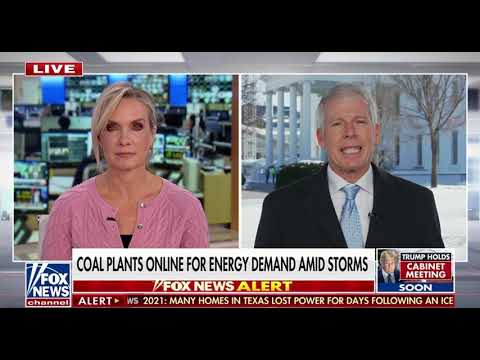
Energy Secretary says DOE emergency orders kept coal plants online during winter storm
Loading...
Summary
Energy Secretary Chris Wright told an interview that Department of Energy emergency orders allowed coal plants to remain online during last week’s storm, which he said helped meet peak demand and 'likely saved hundreds of American lives.' He also cited a claim that 17 gigawatts were kept available by those actions.
Energy Secretary Chris Wright said the Department of Energy issued emergency orders to keep coal-fired generating units online during last week’s winter storm, a step he said was taken to meet peak electricity demand and protect public safety.
"It has likely saved hundreds of American lives," Wright said in an interview, attributing the action to preventing power outages and loss of heat during prolonged cold. He also said the administration’s actions kept about "17 gigawatts" of coal capacity available at peak demand.
Wright described a broader mix of generation that kept the lights on during peak periods, naming natural gas, coal and nuclear as the primary workhorses. He contrasted the response with an earlier cold front during the Biden administration, saying that event resulted in significant fatalities when power was lost.
The secretary framed the emergency orders as part of a larger policy approach to increase available energy supply, saying such measures lower costs for consumers and improve resilience in storms. He added that local distribution failures — for example, iced lines in Mississippi, Louisiana and Tennessee — remain a separate problem that federal energy policy cannot directly control.
Wright’s claims about lives saved, the 17-gigawatt figure and the comparison to prior incidents were presented on-air as assertions by the secretary. The interview did not include independent verification or detailed documentation of those numbers.
The segment concluded with Wright noting his department’s intent to keep generating capacity available during peak events while federal and local officials address distribution repairs and longer-term infrastructure issues.