Speakers credit higher U.S. fossil-fuel output and coal with stabilizing power during cold snap
Loading...
Summary
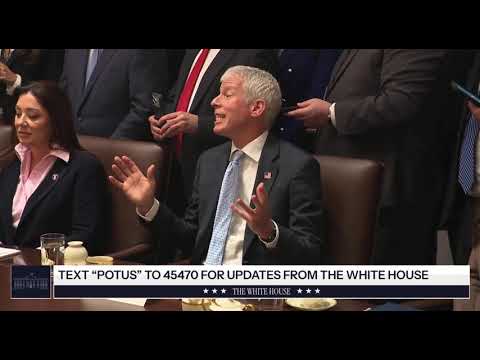
Speakers at a public exchange credited recent increases in U.S. oil, gas and coal production for averting widespread outages during a recent cold snap, while criticizing wind and other renewables for underperforming at peak demand.
Chris said the administration's "energy dominance agenda is firing on all cylinders," citing claims that U.S. oil production "is greater than Saudi Arabia and Russia combined" and that U.S. natural-gas production "is greater than Russia, China, and Iran combined." Chris added that the Department of the Interior "has taken in more money on oil and gas lease sales in the first year of this administration than the entire 4 years of the Biden administration."
On coal, Chris and the president credited the fuel with meeting peak demand during the recent cold snap. Chris said "hundreds of American lives have been saved" because of renewed coal use and asserted coal provided "20 times more electricity than solar and batteries" during the highest-demand periods; he later said coal supplied about "25% of our electricity during this high demand time." The president interjected repeatedly to emphasize coal's resilience in freezing weather, saying "That's true. It's coal" and arguing coal "doesn't mind very cold weather."
Both speakers criticized wind and other nonthermal sources. The president said "The windmills, by the way, are all frozen" and described some wind projects as heavily subsidized, calling them "the worst, most expensive form of energy there is." Chris pointed to New England data and said that at peak demand "wind, solar, and batteries ... delivered less than 3% of the electricity needed."
The remarks distinguished transmission-system performance from local distribution problems: Chris said there had been "no failure of the electricity bridal [transmission], no failure of long distance transmission lines," but added that local distribution lines had iced and crews were working to restore service. He said regulators and policy choices that had prevented plant closures helped avoid more severe outages, stating "17 gigawatts of coal generation plants were slated to close last year that were stopped from being closure by this administration."
Speakers also raised policy and fiscal claims. Chris criticized past subsidy policy, saying the "working families tax cut act ... got rid of $500,000,000,000 of subsidies" that, he said, made energy "more expensive and less reliable." He credited the administration's actions with lowering prices and bringing jobs. The president praised an individual named Chris Wright and described private-sector steps, including companies building on-site electric generation, as evidence the U.S. is not "falling behind China."
The claims in these remarks were presented without independent verification in the exchange. Several statements combine production, mortality and subsidy figures presented as factual assertions during the remarks; the speakers did not provide supporting documents or citations in the transcript for those numbers.