Get Full Government Meeting Transcripts, Videos, & Alerts Forever!
Get email alerts on the 988 Hotline topic
No spam. Unsubscribe anytime.
United Indian Health urges expanded tribal options and outreach for 988 crisis line
Summary
At a Humboldt County Human Rights Commission meeting, a United Indian Health presenter described how 988 georouting now directs callers to local resources but said California lacks a dedicated tribal option; she urged culturally specific call routing, local field services and outreach to remote Indigenous communities.
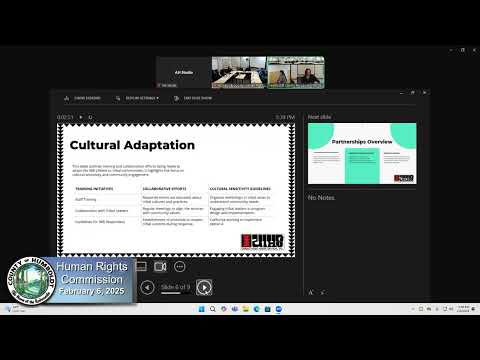
Tina Veil, a presenter from United Indian Health, told the Humboldt County Human Rights Commission that the national 988 crisis number can now route callers by location but California currently lacks a tribal-specific call option that would connect Native American callers to culturally aligned responders.
Veil outlined the hotline’s evolution, saying 988 became a nationwide number in July 2022 and that georouting implemented in September now routes callers to centers nearer their physical location. She said callers from Humboldt County are currently routed to Sacramento-area centers such as WellSpace and Didi Hirsch. "988 is not to be confused with 911," she said, adding that the line is intended for crisis and heightened emotional states as well as suicide prevention.
Veil described gaps she has seen in tribal implementation and local field services. "California doesn't have [an option 4 for Native callers] yet," she said, and United Indian Health is "in close works with policymakers to bring option 4 to California." She said tribal-specific routing exists elsewhere (citing a tribal-oriented line in Washington) and that a locally routed option would help callers who prefer culturally specific support.
Commissioners and attendees pressed Veil on georouting and funding. Veil explained that georouting pings a caller’s cell towers so the call can be routed to local resources after initial crisis care, and that local referrals can include United Indian Health, youth services and tribal programs. On funding, she said the 988-related work is supported in part by federal SAMHSA grants; commissioners noted some federal funding streams have been frozen and asked about sustainability.
Veil described ongoing outreach in Humboldt County, including clinic visits, tabling, a billboard campaign and offers to present in schools. She emphasized that suicide rates among Native American communities are higher than other groups and framed 988 awareness as an upstream prevention tool: callers need not be at the point of immediate self-harm to use the resource.
The commission agreed to assist with outreach: members requested a single-slide graphic for the commission’s Facebook page and suggested adding 988 information to the commission hotline message. Veil provided a national contact number she used for outreach and accepted offers to cross-post materials.
Next steps noted by the commission include coordinating local outreach materials, adding a local hotline number to resource cards, and continuing policy discussions to secure a dedicated tribal routing option in California.