Get Full Government Meeting Transcripts, Videos, & Alerts Forever!
Get email alerts on the Public Health Tobacco topic
No spam. Unsubscribe anytime.
After hours of testimony, board directs staff to refine tobacco retail transfer rules and radius exemptions
Summary
Following extensive public comment from small retailers, the board directed staff to return with options to keep the retailer cap while exploring a radius exemption for isolated stores and limits on transferability by license‑count; motion passed 5–0.
The Board of Supervisors spent significant time Oct. 21 examining the county's Tobacco Retail Licensing (TRL) ordinance after months of outreach and several rounds of amendments. Public Health staff summarized outreach efforts and explained the TRL's two key provisions: a density cap (one license per 2,500 inhabitants) and a limited transferability clause that allows license transfers only to immediate family (parent, child, spouse, domestic partner).
Public Health Director Sophia Perera and nicotine‑prevention staff said outreach included mailed notices, in‑person visits, workshops in Benbow/Willow Creek/Eureka and targeted calls and signage. Staff said the county initially had 60 state‑licensed tobacco retailers in unincorporated areas and 54 remain after compliance work.
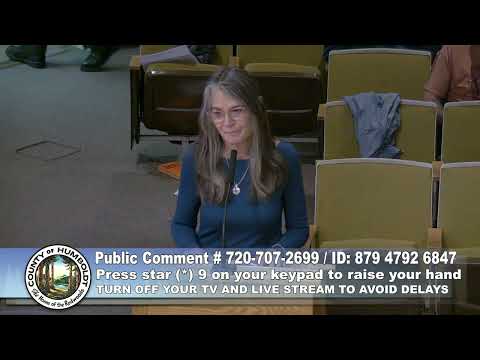
Dozens of small retailers and community members testified in person and via Zoom that they did not understand the transferability limitation when the TRL passed and that the rule reduces the value of a business on sale because purchasers cannot obtain an equivalent county tobacco license unless they are an immediate family member. Several owners said the restriction has stalled pending sales and threatened retirement plans backed by the business sale.
Supervisors debated multiple options raised in ad hoc committee discussions: (1) an isolated‑store exemption based on a mileage radius (5 or 10 miles were discussed), (2) distributing the cap by census tract to avoid concentration in some communities, and (3) limiting transfers to buyers who hold few or no existing licenses so that large license holders cannot consolidate outlets.
After a board straw poll and discussion, the board directed staff to return with concrete recommendations: maintain the existing county cap, develop radius exemption options (staff will evaluate 5‑mile and 10‑mile variants and legal definitions of "town"), and draft approaches to limit transferability based on the number of licenses owned by a buyer. The board's direction was approved by voice vote (5–0). County counsel and public health staff will work with the ad hoc and return with recommended ordinance language and legal analysis for implementation.