Get Full Government Meeting Transcripts, Videos, & Alerts Forever!
Get email alerts on the Mdot Statewide Projects topic
No spam. Unsubscribe anytime.
MDOT tells House subcommittee it delivered $2.3 billion in 2025 work and outlines major 2026 projects
Summary
MDOT Chief Operations Officer Greg Bruner told the House appropriation subcommittee MDOT and its partners completed about $2.3 billion of work in 2025 (improving roughly 1,800 lane miles and spending about $487 million on maintenance) and previewed major 2026 projects including I-94 near Detroit Metro Airport, US-23 reconstruction, I-475 phases in Flint and the Gordie Howe Bridge turnover to CBP this spring or early summer.
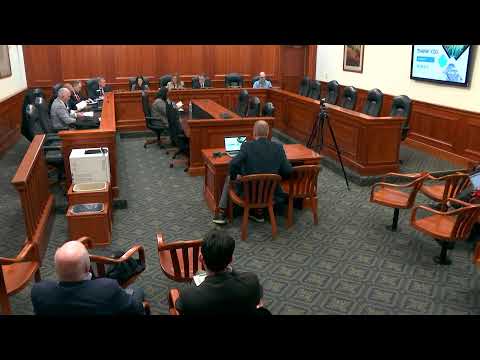
MDOT Chief Operations Officer Greg Bruner told the Michigan House appropriation subcommittee on state and local transportation that the department and its partners completed roughly $2,300,000,000 of work in 2025 and will move forward this year on several large reconstruction projects across the state.
"Last year we did about $2,300,000,000 worth of work," Bruner said, adding that the work represented industrywide delivery with contractors and labor partners and that MDOT recorded about 1,800 lane miles of roadway improvements and roughly $487,000,000 in maintenance activity in fiscal 2025.
Why it matters: the projects described affect regional mobility, freight movement and local economies across Michigan and include several multiyear freeway reconstructions and bridge replacements that will require ongoing contractor work, staging and community coordination.
Major 2025 accomplishments and near-term project slate Bruner highlighted the Gordie Howe Bridge complex as largely structurally complete and said the U.S. port-of-entry work is nearing turnover to U.S. Customs and Border Patrol (CBP). He described the site as about 167 acres with roughly 60 inspection lanes (34 on the U.S. side, 26 on the Canadian side) and said Canada funded the bridge and the U.S. role is to ensure federal-aid eligibility; an opening was described as likely in "spring, early summer" after CBP acceptance.
Other projects Bruner described as completed or substantially complete in 2025 included work on Grandview Parkway (M-72/M-22) in Traverse City (roundabout and pedestrian improvements), the US-127 project to the I-96 interchange (built with Rebuilding Michigan funds), and a $30,000,000 I-96/Fruit River Avenue bridge replacement in Kent County that widened an older two-lane span to five lanes and added a non-motorized path.
Looking to 2026, Bruner outlined large projects slated for letting or construction, among them: - I-94 near Detroit Metropolitan Airport: roughly 10 miles of concrete reconstruction with an estimated cost of $342,000,000, including a new interchange at Ecorse Road and associated drainage and lighting work. - US-23 (I-94 to Earhart Road): a reconstruction project in design with about $320,000,000 cited; Bruner said public engagement led MDOT to retain two through lanes rather than expand to three. - I-475 (Flint corridor): a later phase estimated at roughly $280,000,000 focused on "rightsizing" the freeway and converting one vehicle bridge to pedestrian use to reconnect neighborhoods; the start may be late 2026 or early 2027. - Local and regional fixes: roundabouts, pump-station upgrades (a PROTECT resiliency grant was cited to support a pump-station project in Grand Rapids), left-turn lanes in Ontonagon County (M-26) and interchange ramp additions near Kalamazoo on US-131.
Financing and program status Bruner said the Rebuilding Michigan program remains the funding vehicle for many of these projects and that about $700,000,000 in Rebuilding Michigan bonds remained available for allocation; he also noted that federal funding depends on congressional reauthorization or extension and that MDOT continues to coordinate on federal funding priorities.
Questions from committee members focused on local impacts and process: Representative Wharton pressed MDOT on how "road diets" are selected and Bruner said MDOT evaluates average annual daily traffic thresholds and seeks a supporting resolution from the local city before implementation. Members also sought updated timelines for I-696 work and the Gordie Howe turnover; Bruner reiterated expected windows but said final dates depend on contractor turnover and CBP acceptance.
The committee did not take formal votes on the projects discussed; the meeting concluded after questions and procedural business.
Next steps: MDOT expects ongoing design, community engagement and staged construction across the projects described, with additional State Transportation Commission approvals required for certain allocations or new bond issuances if proposed.