
Senate hearing urges swift FirstNet reauthorization while probing oversight, governance and resiliency
Get AI-powered insights, summaries, and transcripts
Subscribe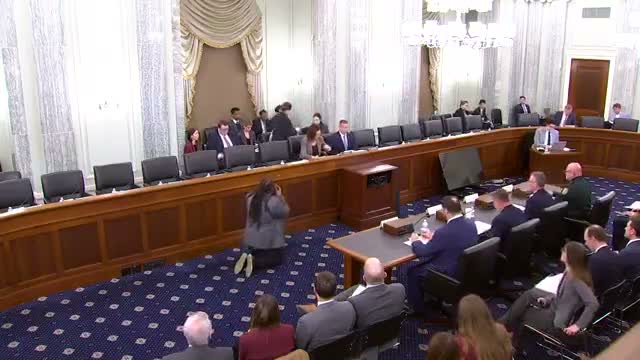
Summary
Senators questioned FirstNet officials and major carriers about Inspector General findings, board governance, rural coverage and disaster resiliency as witnesses from the First Responder Network Authority, AT&T, Verizon Frontline and APCO urged reauthorization and outlined fixes.
WASHINGTON — Senators pressed witnesses at a Commerce Committee hearing on the reauthorization of the Public Safety Broadband Network, known as FirstNet, focusing on oversight weaknesses identified by the Commerce Department’s Office of Inspector General, governance changes proposed by the FirstNet Authority board, and efforts by AT&T and Verizon to improve resiliency and rural coverage.
Sheriff Michael Atkinson, acting chair of the First Responder Network Authority Board, told the subcommittee that FirstNet ‘‘has been a success,’’ but said the board must strengthen oversight and continuity. Atkinson asked Congress to consider ‘‘staggering these terms every 3 years’’ for board members and to expand public‑safety seats, saying, “we would ask that you dedicate 5 so that the men and women public safety have a direct and continued, priority impact.” He also urged clearer lines of authority so the board can hold staff accountable.
Scott Agnew, president of FirstNet and public sector mobility at AT&T, urged senators to reauthorize FirstNet ‘‘well in advance of the February 27 expiration’’ and outlined the company’s role under the contract selected in 2017. Agnew said AT&T expects to invest ‘‘approximately $40,000,000,000’’ over the 25‑year term and that the FirstNet Authority has planned to reinvest ‘‘more than $8,000,000,000’’ over the next decade. Agnew confirmed AT&T selected a satellite partner for direct‑to‑device capabilities, saying, “Currently, the deal from a direct to cellular, from a satellite perspective is with AST, Senator.” He described the selection as the result of a private RFP evaluated on connectivity, capacity, resiliency and performance.
Corey Davis, vice president of Verizon Frontline, urged Congress to promote ‘‘multinetwork ecosystems’’ and competition so public safety agencies have alternative providers during outages. Davis said redundancy is ‘‘the only true service of last resort’’ and warned that relying on a single provider creates a national‑security risk if that provider experiences an outage.
Mel Meyer of APCO International, representing public‑safety communications professionals, pressed for operational performance metrics tied to real‑world conditions. Meyer recommended measures including ‘‘latency,’’ ‘‘uplink throughput,’’ ‘‘cell edge performance’’ and ‘‘priority activation times,’’ and he said power backups and cybersecurity should be part of testing and benchmarks.
Senators repeatedly cited Commerce OIG reports that flagged problems such as missed milestones, unverified coverage claims and weaknesses in performance oversight. Atkinson said the board has reviewed the OIG findings, formed a working group to identify meaningful performance measures and instructed the executive director to ‘‘lean into’’ and resolve the issues. “If you’re going to ask me to be accountable, I suggest that I need the authority to do that,” he told the panel.
Lawmakers also questioned whether the program uses taxpayer funds and how proprietary procurement processes affect congressional oversight. Agnew said initial spectrum auction proceeds and subsequent sustainability payments fund FirstNet‑specific investments; he characterized the sustainability payments as money AT&T provides under the contract rather than annual appropriations. Senators pressed that federal‑funded physical assets enabled by FirstNet investments should be accessible to all public‑safety providers.
Multiple members pressed witnesses about disaster preparedness after recent major events, including hurricanes and the Maui wildfires. Agnew and Davis described changes since Hurricane Helene and the Maui response: increasing smaller, more affordable deployable assets, adding triage teams for surge requests and expanding assets in islands and remote states. Agnew said FirstNet has ‘‘tripled the amount of assets on each of the island[s]’’ after Maui and has coordinated priority barge and airlift arrangements with the National Guard.
Rural and tribal coverage also drew sustained attention. Agnew said the opt‑in process led to some 1,200 sites built from public‑safety feedback and cited increases in tribal coverage; he said coverage workshops and a public‑safety‑driven build plan identify where new sites are required. Senators from New Mexico, Nebraska, Alaska and other states urged more field testing and local engagement to ensure maps and tools reflect real‑world coverage.
The chair closed the hearing by noting senators may submit additional questions for the record by Feb. 4; witnesses were given until Feb. 18 to respond.
What's next: The Subcommittee is seeking comment and documentation from witnesses, and senators signaled an interest in statutory changes to governance and oversight as they consider reauthorization language.