Bill would require continuous barrier where Lincoln prison abuts homes after neighbors describe drugs, trash and lights
Loading...
Summary
LB 863 would require the Department of Correctional Services to build a solid, continuous barrier where a qualifying prison sits within 100 yards of a residential property line; nearby residents testified to persistent litter, drug runs and bright lights that they say have degraded safety and quality of life.
Senator Jason Prokop introduced LB 863 to require the Nebraska Department of Correctional Services to construct a “solid and continuous physical barrier” where a qualifying correctional facility is located within 100 yards of a residential property line, naming the Lincoln Correctional Center as the only facility that would meet both criteria under the bill.
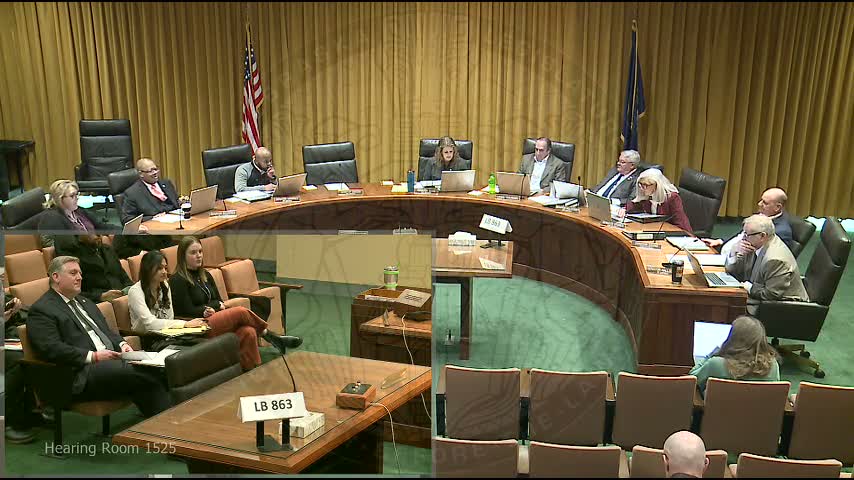
The bill’s sponsor told the Judiciary Committee the measure is aimed at addressing “documented safety and quality-of-life concerns” for people who live next to the prison. “There is nothing out there right now,” Prokop said, explaining his office circulated maps and a mock-up showing a continuous concrete barrier as the consensus option from meetings with affected neighbors and department staff.
Neighbors who live adjacent to the facility described trash, noise, traffic and direct safety fears in emotionally direct testimony. Sue McCollum May said she has lived on her property for more than 35 years and now keeps her six horses inside at night because “people are coming in and out” through the pasture. “There is so much trash that comes from these people — food packages … clothing — right up at our back pasture,” McCollum May testified. She also said a newly built parking lot elevated the grade behind her property and has caused new flooding into her pasture.
Walter Audi, another nearby homeowner, told the committee that development in 2018 moved prison operations to within about 24 feet of a property line and that intense LED lighting, generator noise and what he described as drug traffic have “permanently altered” his family’s quality of life. He said NDCS has installed one hood on a light near his property but that repeated requests for mitigation have gone unanswered.
Committee members pressed for technical detail. Senator Storm asked where the yellow line shown on the handout indicated the proposed barrier; Prokop said it would run along the state property line adjacent to residences. Senator Holcroft asked whether residents or the prison came first; Prokop said residents were there before expansions of the facility pushed closer to private yards. Lawmakers also discussed whether the bill’s 100-yard trigger is the right metric; Prokop said the figure was illustrative and intended to capture the near-adjacent properties that neighbors say are already exposed.
Prokop acknowledged cost questions and said an amendment to the bill is being circulated to narrow applicability and reduce the fiscal impact; he said initial language changes would substantially lower the fiscal note. He said NDCS had earlier declined to commit to construction and that residents had sought legislative remedy when budget constraints limited the department’s ability to build a barrier itself.
The committee heard no formal opposition during the in-person hearing; written comments filed with the record included six proponent statements and two opponents. The hearing concluded with committee members indicating willingness to discuss the sponsor’s amendment and further fiscal details before any vote.
The Judiciary Committee took testimony and will consider the bill and the circulated amendment in further committee work. No formal vote was recorded during the hearing.