
CUSD 200 finance team flags $4.8 million reporting discrepancy, outlines options to close five‑year budget gaps
Get AI-powered insights, summaries, and transcripts
Sign Up Free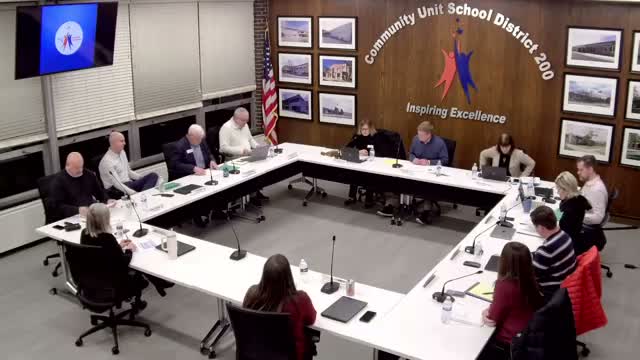
Summary
District finance staff presented a five‑year forecast showing structural pressures after capital investments, disclosed a $4.8 million June 30 fund‑balance reconciliation difference tied to a payroll runout date error, and outlined revenue and expenditure levers the board will consider ahead of an amended budget in March and final adoption in May.
At the Jan. 28 meeting of the CUSD 200 Board of Education, district finance staff presented a five‑year financial forecast that identified both long‑term budget pressures and a recently discovered accounting discrepancy.
Doctor O'Keefe, who led the presentation, said the forecast uses the Frontline Analytics tool and conservative assumptions about CPI, new construction, and state reimbursements. He noted the district's last audited data show an operating expense per pupil of about $19,020 and a fund balance in the mid‑20 percent range on an accrual basis. He also said the district's bond rating was reaffirmed by Standard and Poor's at 'AA+' in recent reporting.
O'Keefe said staff are using a 2.7% CPI baseline for the tax levy and modeled roughly $30 million in new construction (down from the prior request of $40 million) and a modest 3% future EAV increase for planning. He described other uncertain revenue sources — personal property replacement tax (CPPRT), Evidence Based Funding (EBF), MCAT reimbursements and federal grants — as conservative or flat in the baseline because final state and federal budgets remain unknown.
The presentation included a reconciliation of the district's cash fund balances that identified a $4,800,000 discrepancy tied to a payroll runout entered with a July payroll date instead of a June date. "That difference is $4,800,000," O'Keefe said, and he explained the payroll entry was later corrected for payments but an audit‑period adjustment was not made in June. He told the board additional review steps have been added to payroll processing to reduce the risk of recurrence.
O'Keefe also summarized auditor adjustments the district must make under new GASB guidance, including reclassifying certain lease payments out of operating funds into debt service and treating a $3,515,000 reimbursement from a recent debt issuance as a below‑the‑line transfer rather than operating revenue. He said those treatments reduced the operating fund balance reported for the year compared with the amended budget assumptions.
On expenditures, staff pointed to labor costs (contract floors tied to CPI), anticipated retirements and replacements, medical/dental insurance renewal estimates (initial estimates in January showed PPO up about 11.7% and HMO about 10%), and ongoing capital investments (Sherman Durgis allocations) as the primary cost drivers. O'Keefe said the model assumes replacement hires at first‑year or experienced levels to estimate offsets from retirements.
Trustees pressed staff on internal controls, timing and next steps. Board members asked whether the payroll control changes provide sufficient oversight; O'Keefe said two additional reviewers now check the June runout entries. The board was told a tentative amended budget incorporating the recent debt issuance will come to the board in March, with final action expected in May. Staff said they will re‑run five‑year scenarios after the amended budget and present cash‑flow analyses with the tentative FY‑27 budget in July.
District leaders also identified three primary levers to close forecast gaps: modest revenue actions (for example, reexamining pandemic‑era fee reductions), targeted expenditure reductions through attrition and staffing adjustments, and reconsideration of some capital spending. Staff emphasized they do not plan large‑scale program cuts immediately and will attempt to prioritize efficiencies before reducing services.
The board did not take vote on budget policy changes at the meeting; it directed staff to refine scenarios and return to the finance and facilities committees for further review.
The next procedural milestone is the board's March meeting, when staff will present the tentative amended budget; final action is scheduled for May.