
Panel advances bill letting localities adopt environmental justice strategies in comprehensive plans
Get AI-powered insights, summaries, and transcripts
Subscribe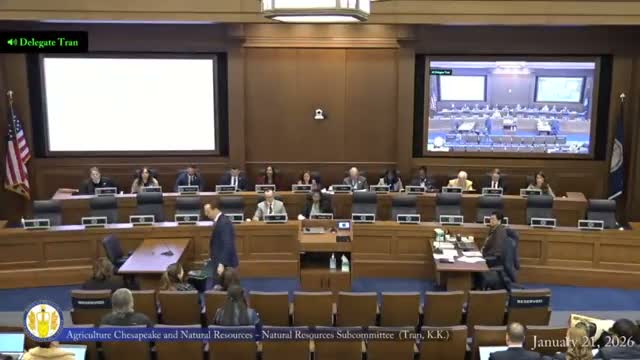
Summary
HB 256 would authorize Virginia localities to incorporate environmental justice strategies into their comprehensive plans to identify pollution hot spots, set goals to reduce health and environmental risks, and improve civic engagement; the subcommittee reported it 7–3 after supporters and industry representatives clashed over definitions and potential local litigation.
Delegate Simons introduced HB 256 as a measure to center comprehensive planning on people by permitting localities to adopt an environmental justice strategy that maps pollution sources, identifies vulnerable communities, and sets local goals to reduce disproportionate health and environmental risks. “This strategy would help localities identify and understand disproportionate health and environmental risks and set local goals for reducing those risks,” Simons said.
Supporters from environmental and faith-based organizations argued the change improves planning outcomes and unlocks funding and programmatic opportunities. Kim Suttart of Virginia Interfaith Power & Light said the strategy would map pollution sources and hazardous sites, identify vulnerable communities and propose remedies, while Jay Ford of the Chesapeake Bay Foundation and others highlighted potential funding connections for resilience and weatherization programs.
Opposition centered on concerns from the Virginia Manufacturers Association and business groups that the bill broadens the definition of environmental justice into a “healthy community” standard that includes non-environmental factors (broadband, food access), creating uncertainty for permitted industrial sources and potential local litigation. Brett Vassy said industries need a clear compliance checklist and warned that local standards without a state baseline could cause confusion.
Committee members debated necessity and scope. Some members said localities already may add elements to comprehensive plans; proponents argued there is currently no explicit statutory authorization to examine pollution sources or 'fence line communities' in comprehensive plans. The patron noted Governor Youngkin vetoed a prior version last year but emphasized stakeholder work and the bill’s limited, enabling scope.
After discussion and questions, the subcommittee voted to report the bill to the full committee by a vote of 7 to 3.