
Virginia bill would phase out childcare subsidies to avoid ‘benefits cliff’
Get AI-powered insights, summaries, and transcripts
Subscribe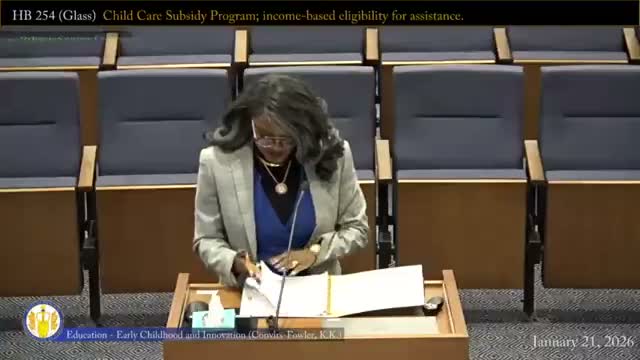
Summary
HB 254 would require the Department of Education to implement a phased reduction in childcare subsidies—capped at 10% step-downs—with appeal and hardship exceptions, aiming to prevent families from losing assistance after small wage gains.
Delegate Marcus Glass presented HB 254 on behalf of families who lose childcare assistance after small pay increases, describing the current system as a “benefits cliff” that can force parents to refuse raises or quit jobs. The bill would require the Department of Education to design a phased reduction model for childcare subsidies, with reductions no larger than 10% at each step and procedures for hardship appeals.
The bill’s sponsor, Delegate Glass, said the proposal targets families trying to move out of poverty. “This is what we call the benefits cliff,” Glass said. “You can’t climb a ladder that is rigged to collapse as soon as you take your first step.” He told the committee the legislation would shift policy from “an all-or-nothing mentality” to a more gradual transition off subsidies.
Supporters from the advocacy and education community described the problem as widespread. Biren Coxwell of 4Kids, which runs economic mobility programs, said frontline staff report that clients routinely refuse raises or quit work to avoid losing benefits: “10 out of 10 of those women had either quit a job or refused a raise because of the benefits cliff,” Coxwell said. Chad Stewart of the Virginia Education Association said stabilizing access to childcare improves K–12 outcomes and strongly endorsed the bill.
Delegate Glass told the committee the bill text creates the phase-out framework (lines noted in the bill) and leaves implementation details to the Department of Education. He said the bill includes appeal language and exceptions for hardship and disability. The sponsor and witnesses emphasized the bill’s potential effect on working parents, children in early childhood and school-age programs, and the broader workforce.
Committee members offered limited questions and personal endorsements. Delegate Anderson, speaking from personal experience, thanked the bill sponsor and said the change would have helped when they lost SNAP benefits after a raise. After testimony and discussion, the committee voted unanimously to report HB 254 and refer it to the House Appropriations Committee for further consideration.
The measure now moves to Appropriations; the bill text delegates threshold-setting to the Department of Education and includes appeal provisions, but the committee did not adopt numeric fiscal offsets or a budget appropriation at this hearing.