
Franklin Elementary shows midyear gains in attendance and reading benchmarks, staff say
Get AI-powered insights, summaries, and transcripts
Sign Up Free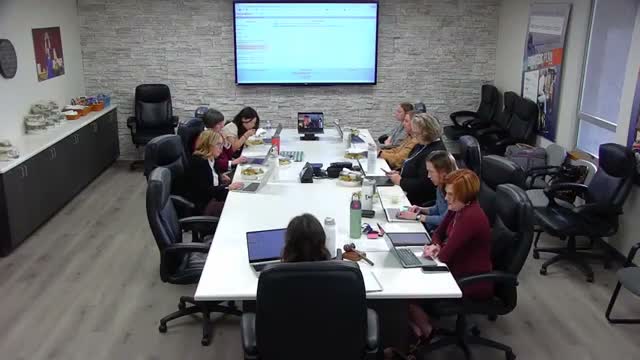
Summary
Franklin Elementary staff told the Provo City School Board on Jan. 27 that attendance rose district-aligned initiatives and that midyear reading benchmarks show sizable movement from 'well below' toward grade-level for many students; school leaders outlined targeted interventions and next steps for continued progress.
Franklin Elementary teachers and administrators reported noticeable midyear improvements in attendance and reading at a Provo City School Board study session on Jan. 27.
Superintendent Wendy Dow introduced the update and credited a recent school restructuring and targeted leadership changes for part of the improvement. Principal Brooke Ann Dalby and assistant principals described classroom-level strategies and incentives tied to behavior and academics. "We have added some financial incentives tied to them meeting these particular goals," Dow said as she summarized school-level changes that preceded the midyear review.
School presenters showed benchmark data that, in several grades, moved many students from the lowest categories into higher performance bands. For example, one presenter said kindergarten benchmarks rose substantially: “27 who started red, only 5 were still red in the middle of the year,” reflecting small-group instruction and intervention work.
Special education staff described a shift toward an inclusion model that emphasizes in-class supports with push-in services and strategic pull-out only for targeted needs. The special education lead, Alisa Taysom, and staff emphasized sensory supports and occupational therapy as part of the plan to help students with self-regulation and access to general education classrooms.
The presenters outlined concrete next steps: coach-led data dives, teacher–administrator collaboration to align progress monitoring with the middle-of-year (MOY) results, and revision of tier 1 classroom plans and intervention groups. One coach summarized the approach: data teams will identify ‘‘what we can control’’ at the classroom level and change intervention groupings or progress-monitoring targets accordingly.
Board members pressed for clarity on transition supports for older students. A board member asked how students who remain below benchmark in sixth grade will be supported in seventh grade; district staff pointed to coordination with neighboring secondary schools (Shoreline and Centennial) to align interventions and avoid gaps when students move to middle school.
Board members praised teachers for the gains and asked staff to continue sharing practices that show results. The meeting packet and presentation slides were provided to the board; staff said additional detailed student-level data remain available for administrators and the board to review.
The school’s work will continue into the second half of the year with targeted coaching, adjusted intervention time (win time), and further alignment of progress monitoring to support continued growth.