Get Full Government Meeting Transcripts, Videos, & Alerts Forever!
Get email alerts on the 911 Study topic
No spam. Unsubscribe anytime.
Mayor's office contracts LEAP to study Monroe County 911 responses, report due mid-late 2026
Summary
A community member told the CAPS commission the mayor's office has contracted with the Law Enforcement Action Partnership (LEAP) to study local 911 calls and recommend alternatives; staff and members discussed stakeholder interviews and public outreach. Isabelle said the study begins in April and will take about seven months.
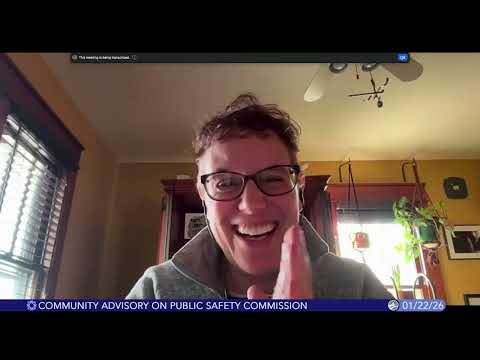
Isabelle, a community member, told the Community Alternatives to Public Safety (CAPS) Commission that the mayor's office has entered into a contract with the Law Enforcement Action Partnership (LEAP) to study local 911 calls and recommend how some calls might be redirected from police to alternative responders.
"They did enter into a contract with LEAP, which is the Law Enforcement Action Partnership to do a study of our 911 calls and make recommendations on how best to use our current resources," Isabelle said. She initially estimated the study would take "6 to 9 months" but later corrected that timeline, telling the commission the study now is scheduled to begin in April and will run about seven months from that start date.
Commission members and staff discussed the intended scope of the review. Members asked whether LEAP would analyze calls across police dispatch, Stride Mobile and other city partners. Isabelle and staff said LEAP's work is expected to include conversations with the police, fire department, mobile integrated health teams and other stakeholders to produce a comprehensive view of who might better handle certain call types.
Staff indicated they will accept Isabelle's offer to share the LEAP scope of work and said they would distribute that document to commission members. Members suggested the commission consider public engagement events (library forums, Zoom breakout rooms) and online input tools to gather community perspectives before and after the LEAP report is released.
Next steps: staff agreed to request and circulate the LEAP scope of work to commission members. Isabelle and other members urged community outreach during the study period so residents can help shape how alternatives to police response might be designed.
What's not specified: the contract value and exact start date beyond the April start month, the full list of stakeholders to be interviewed, and any binding timetable for city action after the report is released.