
Two competing bills would create back-to-school sales-tax holidays; retailers and child-care providers back the idea
Get AI-powered insights, summaries, and transcripts
Subscribe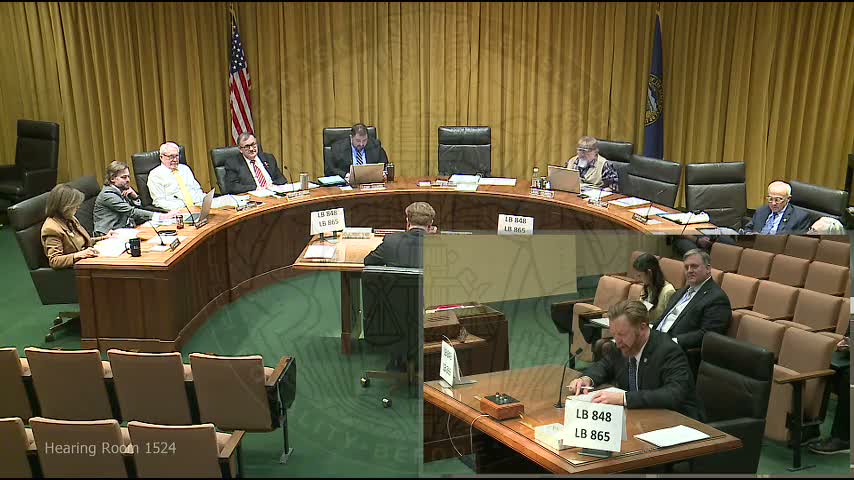
Summary
LB848 (Kavanaugh) and LB865 (Prokop) propose limited sales-tax holidays on back-to-school items to keep shopping dollars in Nebraska and reduce household costs; fiscal notes estimate roughly $3.6M'$3.8M in state revenue loss and the Department of Revenue flagged definitions for streamline-sales-tax compliance.
Senator John Kavanaugh and Senator Jason Prokop opened a combined hearing on two related proposals to create short, targeted sales-tax holidays for back-to-school items.
Kavanaugh's LB848 would create a weekend holiday in early August exempting clothing, school supplies, computer software, graphing calculators, personal computers and peripheral devices for personal use; Prokop's LB865 would exempt clothing, footwear, childcare items and school supplies (with various per-item dollar limits). Both sponsors cited neighboring states and border shopping to make the case for retaining retail spending in Nebraska.
Retail and childcare witnesses supported the bills. Rich Otto of the Nebraska Retail Federation said sales-tax holidays drive foot traffic and urged alignment with Iowa's dates for competitive reasons. Charles Carter, owner of Kids Are Kids Learning Academy, asked lawmakers to consider childcare items and said such a holiday would help families with young children.
Committee questions focused on fiscal-note estimates (Kavanaugh's bill was estimated at roughly $3.6 million in state revenue loss in the fiscal note; Prokop's estimate was similar), whether local-option sales taxes and other levies would be affected (sponsors said they intend for the holiday to suspend total sales taxes for the listed items during the holiday), and retailer compliance under the Streamlined Sales Tax definitions. Retail representatives said they favor streamlined definitions for ease of implementation but noted some definitional complexity remains.
The committee did not vote; sponsors and retail stakeholders said they would work with the Department of Revenue to resolve definitional and compliance questions.