
Nebraska bill would clarify tax treatment of aircraft leases, sponsors say it preserves jobs; airports warn of fund losses
Get AI-powered insights, summaries, and transcripts
Sign Up Free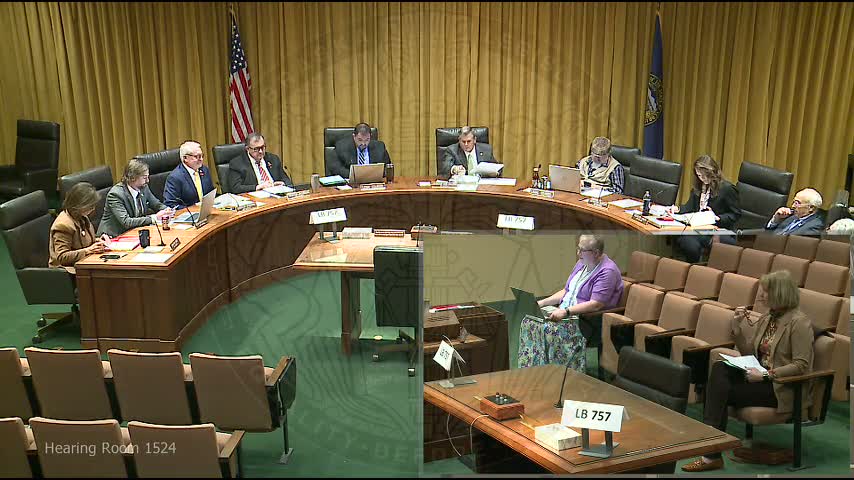
Summary
LB757 would clarify that companies acquiring aircraft to lease within corporate structures can use Nebraska's sale-for-resale treatment, with a 7.5% annual-lease threshold; proponents say it preserves economic activity, opponents warn it could reduce Aeronautics Capital Improvement Fund revenue.
Senator Brad Von Gillern, chair of the Revenue Committee, introduced LB757 on behalf of its sponsor as a statutory clarification that would allow companies acquiring aircraft to use Nebraska's sale-for-resale arrangement when the aircraft are leased, including to related entities. "This is not a tax exemption bill," Von Gillern said, adding the bill sets a 7.5% annual gross-receipts-from-lease threshold to qualify.
Proponents told senators the measure restores long-standing practice and provides predictability for aviation businesses. Stacy Watson, a tax and consulting shareholder at Lutz representing the Nebraska and Omaha chambers, said the Department of Revenue recently changed an administrative interpretation limiting the statute's application to aircraft. "This statute has been in place forever," Watson said. Daniel Chung, a principal with Aviation Tax Consultants, said the change would align Nebraska with neighboring states and ease audit and litigation costs: "By having a statute like 7-57, I think it will streamline administration and everybody can be more productive."
Opponents representing airports said the change risks shifting a large upfront sales-tax payment into smaller annual use payments, reducing dollars directed to the Aeronautics Capital Improvement Fund. John Large, past president of the Nebraska Association of Airport Officials and a member of the Nebraska Aeronautics Commission, offered a $10 million-aircraft example: at a 5.5% sales tax, the state would collect $550,000 at purchase versus roughly $41,250 per year under the proposed annualized approach, meaning it could take more than a decade to recoup the same revenue. "This is trading a $550,000 clear and easily defined sales tax for the potential for annual use payments of less than 10% of what the sales tax would provide," Large said.
Committee members pressed both sides for evidence about secondary economic benefits such as fuel sales, maintenance, and payroll tax gains that proponents say would follow if aircraft are kept and serviced in Nebraska. Proponents argued that personal property taxes and other local economic activity would help offset any short-term reduction; opponents said the Aeronautics Capital Improvement Fund has recently paid significant federal match and state-aid projects and cautioned the fund's loss could reduce federally matched airport projects.
The committee did not take a vote. The sponsor said he would remain available for further questions as the bill moves forward.