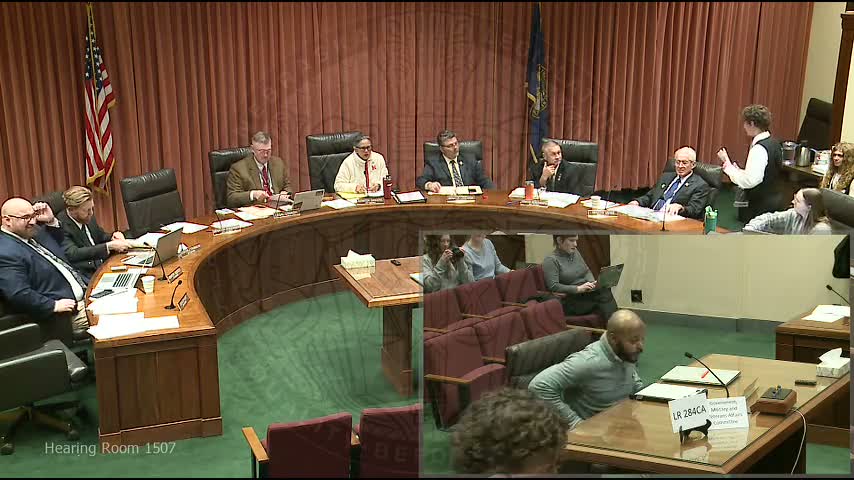
Lincoln students and civic groups back constitutional amendment to let 16- and 17-year-olds vote; opponents raise concerns about scope and ballot cost
Loading...
Summary
LR 284 CA would allow 16- and 17-year-old citizens to vote in the calendar year they turn those ages. Student witnesses and advocacy groups argued it boosts lifelong engagement; some senators raised questions about federal vs. local eligibility and potential ballot/fiscal effects.
Lincoln — Senator Terrell McKinney introduced LR 284 CA, a proposed constitutional amendment to permit Nebraska residents who attain age 16 or 17 in a calendar year to register and vote that year. McKinney said the change would strengthen civic education and participation.
Multiple young Nebraskans testified in support. Holly Bowen, a junior at Lincoln Southeast High School who will turn 18 shortly after the next general election, said being subject to government decisions without a vote undercuts civic ownership. "We drive these streets. We work for this community. We attend these schools, and we want our voice to be heard," Bowen told the committee.
Youth civic groups echoed those points. Nora Wessel of New Voices said lowering the voting age would increase turnout among younger cohorts and promote lifelong voting habits; Civic Nebraska's Kieran Kissler also supported the measure and cited research showing higher participation when voting begins earlier.
Skeptics and some senators asked practical questions. Committee members discussed the limited effect on federal elections (which would remain restricted to citizens 18 and older), whether a phased approach limited to municipal or school-board races would be preferable, and the administrative and ballot costs of placing a constitutional amendment before voters. Senator McKinney said he would consider narrower statutory approaches but prefers giving Nebraskans the choice on a ballot.
The hearing included student testimony, advocacy organizations, and policy discussion about civic readiness and turnout. The committee recorded 11 proponents and 22 opponents on the hearing record; no committee vote was taken.
Next steps: LR 284 CA remains in committee; sponsors and supporters asked the legislature to advance the constitutional question to the ballot so voters can decide.