Lifetime Citizen Portal Access — AI Briefings, Alerts & Unlimited Follows
Nebraska senators split over LB400 to ease firefighters’ burden of proof for cancer claims
Loading...
Summary
Lawmakers debated LB400, which would create a rebuttable presumption that certain cancers in firefighters are work-related. Supporters said it forces employers to consult doctors before denying claims; opponents warned it risks large unfunded costs for small, mostly volunteer, municipalities and urged more negotiation and a fiscal review.
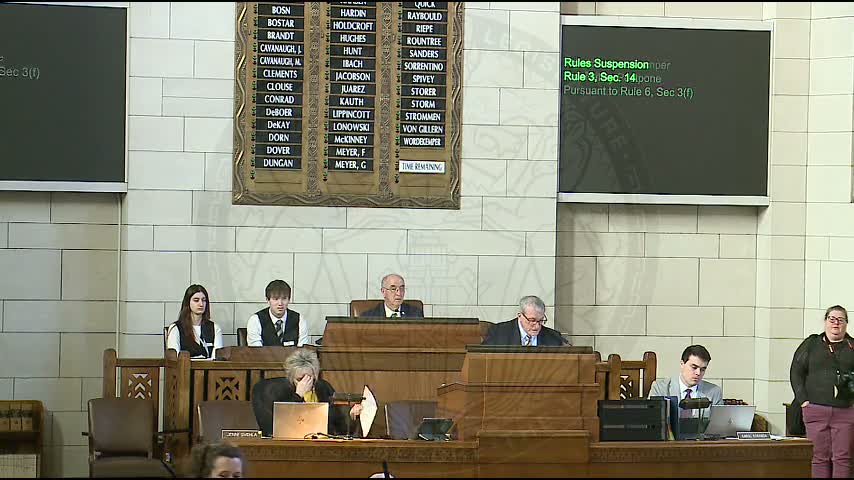
Lincoln — Lawmakers spent much of the day debating Legislative Bill 400, a proposal to create a rebuttable presumption that certain cancers suffered by firefighters are compensable under the Nebraska Workers’ Compensation Act.
Sponsor Senator Werticamper told colleagues LB400 would not create new claims but would require employers or insurers to ask a medical doctor for an opinion before denying a firefighter’s claim for cancer-related workers’ compensation benefits. "LB400 simply says, before you deny a claim citing insufficient medical evidence, you have to actually ask a medical professional for their opinion," he said on the floor.
Supporters framed the change as basic fairness and due diligence for people who perform hazardous work. Werticamper and allies pointed to limited historical claim counts in Nebraska and said stricter volunteer thresholds can narrow eligibility. He disputed the League of Municipalities’ claim that 15,000 volunteers would immediately qualify, saying the Department of Revenue’s volunteer tax-credit data show far fewer active volunteers and that AM1696 (a sponsor-backed amendment) would require 10 years of service, 40% drill participation and 25% call response for volunteers to qualify.
Opponents said the bill shifts large, unpredictable costs to cities, villages and rural fire districts during a budget shortfall. Senator Jacobson, who represents a district with many volunteer departments, warned that small communities often operate on very thin budgets. "How do you make that happen? How do you pay for claims without significant increases in property taxes?" he asked. Several senators emphasized that paid firefighters generally already receive robust health, disability and life insurance and urged sponsors to identify what coverage is missing and to negotiate an alternative.
Senator Hallstrom, who said he filed AM1750, urged a different approach: make the existing Firefighters Cancer Benefit Act mandatory and explore a statewide insurance plan to reduce municipal premiums. Hallstrom summarized the existing benefit framework in the transcript: a $25,000 lump sum for severe qualifying cancers, $6,250 for less severe cancer diagnoses, monthly disability of $1,500 for up to 36 months, and a $50,000 death benefit.
The body considered multiple procedural options. A motion to suspend rules to permit a combined hearing for two bills was adopted earlier in the session. When debate over LB400 brought up a motion to indefinitely postpone (IPP), senators repeatedly traded questions and concerns about fiscal impact, causation standards and mutual-aid liabilities. Sponsor amendments were offered on the floor: AM702 (the committee amendment) narrows the presumption by limiting cases to those where prior physicals showed no cancer and expands the listed carcinogens; AM1696 would narrow volunteer eligibility with explicit participation thresholds.
Roll calls and procedural votes followed. Senators voted on a motion to reconsider and on a motion to bracket; neither procedural maneuver succeeded. Several senators urged that stakeholders — municipal insurers, the League of Municipalities, volunteer and paid fire organizations and the Legislature — sit down for an agreed compromise and a fiscal assessment before the bill proceeds.
The committee reported the bill to general file with amendments, and the sponsor said he will continue to work with colleagues and stakeholders on possible revisions. The Legislature adjourned with the bill alive on the general file, leaving space for further negotiations and amendments ahead of future floor action.
Next steps: LB400 remains on the general file; sponsors indicated willingness to meet with municipal leaders and insurers to pursue compromise amendments or a statewide insurance approach before further action.