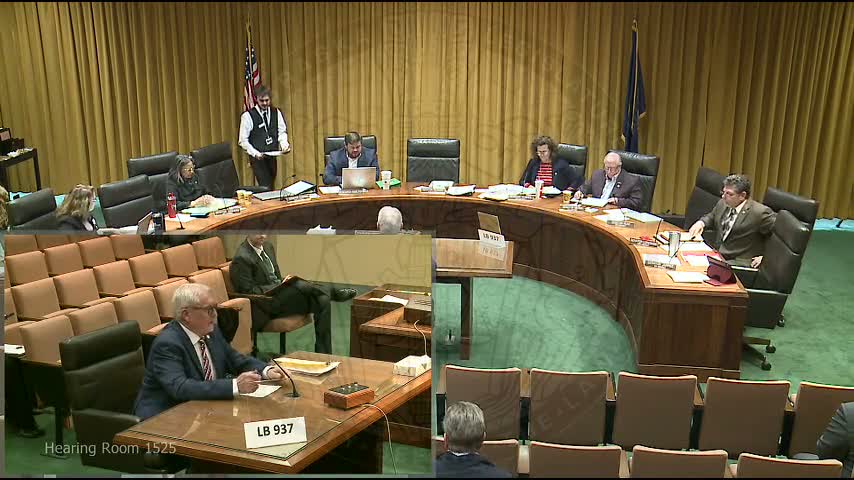
Dyslexia reporting sparks opposition as committee considers NDE cleanup bill
Loading...
Summary
The Department of Education's cleanup bill (LB 9 37) drew strong testimony after proposed language would narrow reading reporting to K–3 and remove explicit testing language for dyslexia; dyslexia advocates urged the committee to preserve testing and K–12 reporting to avoid missing older or masked cases.
Sen. Dave Merman presented LB 9 37 as a Department of Education cleanup bill intended to harmonize obsolete language, align reporting deadlines, and correct technical statutory references. Much of the bill is routine; however, section 8 prompted extensive opposition because it alters how dyslexia and related reading issues are reported and tracked.
Lane Carr of the Department of Education told the committee the department seeks clarity on reading‑improvement reporting, which historically focuses on K–3, while dyslexia language appears elsewhere in statute that covers ages 3–21. Carr said the department wants to "get this right, not get it through" and is willing to work with advocates.
Dyslexia advocates and clinicians told the committee that removing explicit reporting and testing language is dangerous. Lou Ann Linehan said directly: "You can't take that out," urging that language requiring students to be "tested for specific learning disability in this area of reading including tests that identify characteristics of dyslexia" remain in statute. Patty Panzing Brooks and others warned that limiting reporting to K–3 misses students who present later or mask their reading struggles; speakers repeatedly urged keeping testing and identification language to ensure students are tracked across grades. Sharon O'Neil and Tim Kiefer recounted cases of late diagnosis and argued that data collection must include testing results and outcomes so policy and interventions can be targeted.
Lane Carr and Senator Merman acknowledged these concerns and pledged to work with dyslexia advocates on technical amendments. A significant volume of written and online opposition was recorded; the committee signaled follow‑up work to reconcile the department's cleanup goals with advocates' demands for explicit dyslexia testing and K–12 reporting.