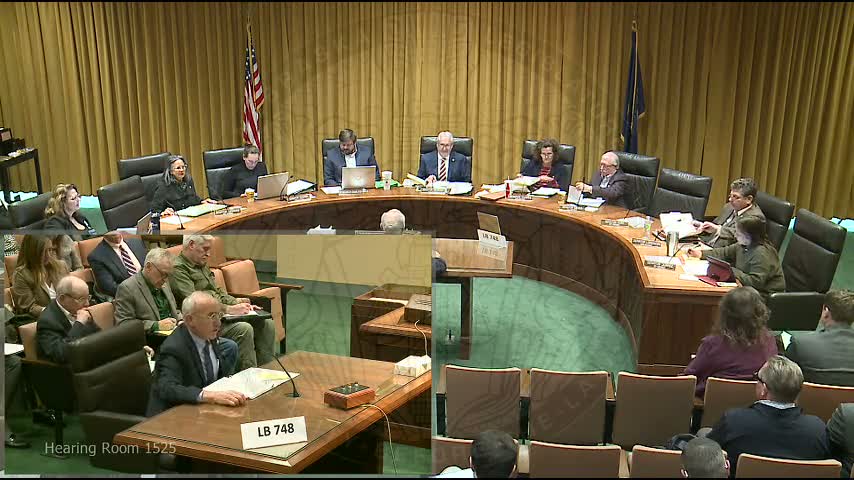
Committee weighs expansion of NEST 529 program to cover K–12 expenses and credentials
Loading...
Summary
Sen. Tony Sorrentino's LB 7 48 would conform Nebraska law to federal changes to 529 (NEST) plans, expand allowable K–12 expenses beyond tuition, permit postsecondary credentialing uses and increase the annual K–12 withdrawal cap; proponents say it keeps Nebraska competitive, opponents warn it may favor wealthier families.
Sen. Tony Sorrentino told the Education Committee he introduced LB 7 48 to align Nebraska's NEST 529 program with recent federal changes and keep the state plan competitive for families and account owners. "Keeping Nebraska's NEST program competitive with other states" was cited repeatedly as a central aim during his opening remarks.
Sorrentino summarized the bill's major changes: conforming state law to federal updates that broaden allowable K–12 distributions beyond tuition to include books, tutoring and instructional materials; increasing the annual allowable withdrawals for K–12 expenses to the federal limit (the bill adopts a $20,000 annual withdrawal cap for certain K–12 expenses); and allowing qualified postsecondary credential expenses (apprenticeships, professional certifications) to be paid from 529 accounts.
Joey Spelllerberg, the state treasurer and trustee of the NEST program, testified that "our program has approximately $7,850,000,000 in more than 303,000 accounts," and said the proposed changes would expand flexibility for families and workforce training. Rachel Beyer, deputy state treasurer, clarified technical rollover rules, saying the 529 account must be in existence for 15 years to qualify for a Roth rollover and contributions made within the last five years cannot be used for the rollover.
Industry and financial‑services witnesses (including Nebraska Taxpayers for Freedom, NEFA, and Union Bank & Trust) emphasized that expanding 529 uses to cover credentialing and K–12 materials responds to how families save and how students pursue postsecondary and workforce credentials. Doug Kagan described expanded allowable uses: textbooks, tutoring, digital tools, workforce training and exam fees for industry licenses.
Opponents focused on equity and fiscal risks. Tim Royers of the Nebraska State Education Association opposed the $20,000 K–12 withdrawal limit, saying it would “only benefit the wealthiest families in the state” and could worsen pressure on state education funding. Daniel Russell (Stand for Schools) argued that 529 participation skews toward higher‑income households and that expanding private K–12 uses could disproportionately help families already able to afford private schools.
Proponents argued the change has no direct fiscal impact because Nebraska’s state tax deduction remains structured around contributions (the deduction limit is unchanged), while opponents said expanded benefits could increase participation and have long‑term revenue implications. Senators asked technical questions about contribution versus withdrawal limits and enrollment effects; the sponsor and treasurer's office agreed to answer follow‑up questions as the committee considers amendments.
The committee closed the LB 7 48 hearing after receiving both detailed industry support and organized opposition focused on equity and fiscal risk.