
Nebraska committee hears bill to let governor tailor dynamic‑pricing bans during emergencies (LB771)
Get AI-powered insights, summaries, and transcripts
Subscribe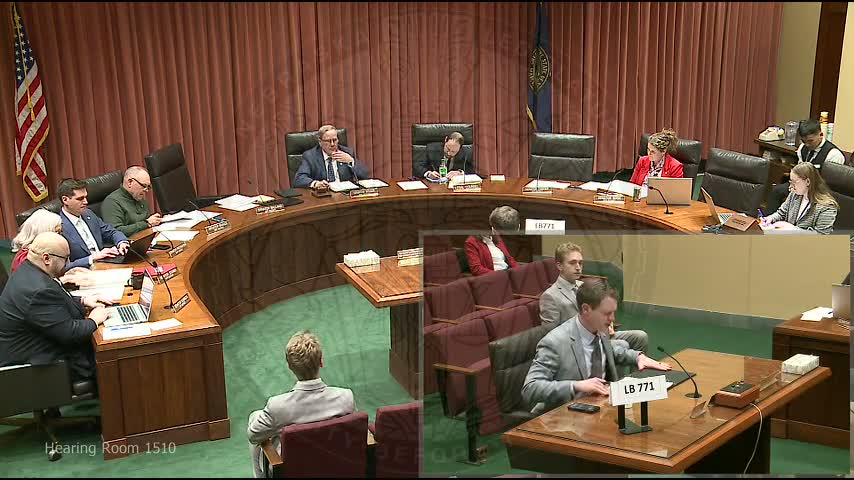
Summary
LB771 would let governors limit a ban on dynamic (surge) pricing to specific areas in an emergency instead of invoking a blanket statewide prohibition. Supporters said the change avoids long‑running, statewide prohibitions that can arise from overlapping disaster proclamations; critics asked whether consumer protections would be preserved.
The Transportation and Telecommunications Committee heard testimony on LB771, a bill to let the governor specify whether a statewide ban on dynamic (surge) pricing applies to an entire state or only to certain geographic areas when declaring a state of emergency.
Senator Beau Ballard, who introduced the bill, said it streamlines a 2015 law that currently triggers an automatic statewide ban on dynamic pricing whenever the governor declares any state of emergency. "This bill would allow the Governor to declare if a ban applies on the announcement of the State of Emergency or limited ban in a certain area," Ballard said, adding the change would prevent drivers outside an impacted area from losing earnings because of unrelated local events.
Irvin Portis, assistant director of the Nebraska Emergency Management Agency, told the committee that the current law can produce unintended, long‑lasting statewide bans because multiple overlapping emergency proclamations can remain open for years while federal funds are disbursed. "This blanket prohibition failed to consider the realities of a state of emergency," Portis said, arguing LB771 would let the governor tailor orders to the needs of each event.
Kristen Hassebrooke, a registered lobbyist testifying for Uber Technologies, said dynamic pricing is a market signal that increases the number of drivers where demand spikes and noted the company’s estimate that "drivers in Nebraska could experience an earnings loss of up to $10,000 per day in total" when dynamic pricing is prohibited statewide. Hassebrooke added that the bill preserves the governor’s ability to protect consumers because the governor can expressly prohibit dynamic pricing in a proclamation or by executive order.
Committee members raised several concerns. Senator Frederickson and others asked whether the governor would have to name affected counties in every proclamation and whether the extra step of expressly prohibiting surge pricing would be prioritized during wide emergencies. Senator Ferguson asked why the statute could not automatically permit dynamic pricing outside of declared counties, rather than requiring the governor to take an additional step to prohibit pricing inside emergency zones.
Ballard closed by offering to work with NEMA and the committee on technical edits. The hearing record shows discussion and testimony but no committee vote during this session.