Get Full Government Meeting Transcripts, Videos, & Alerts Forever!
Get email alerts on the Debt Budgeting topic
No spam. Unsubscribe anytime.
Council auditor recommends aligning debt budgeting with issuance, proposes code change to send savings to PAYGO
Summary
The council auditor presented multi-year debt-budget variances and recommended aligning budget assumptions with typical issuance terms (25–30 years), excluding principal when not due, and considering a municipal-code change to route debt-service savings toward PAYGO rather than new debt.
The Doge committee spent a substantial portion of its meeting on a council-auditor review of how the city budgets for debt and where recent savings have accumulated.
"Consider budgeting and projecting based on 30 or 25 years rather than that 20 year when in general they are doing 30 year increments," Kim Taylor, the council auditor, told the committee as she laid out multi-year variances between debt-service budgets and actuals. Taylor said the variances include a $22 million positive variance tied to a 2022 refinancing and more recent annual variances of roughly $6 million, $7.8 million and $10.3 million in successive years.
Taylor recommended the council consider three changes: (1) align budgeting assumptions with typical issuance terms so the budget does not systematically overstate debt costs; (2) avoid budgeting principal when a first-year issuance shows no principal payment; and (3) consider a code change that would automatically direct debt-service savings into PAYGO (pay-as-you-go) instead of allowing those savings to be reallocated to other uses.
Committee members debated those tradeoffs. Some members said longer payback periods reduce near-term budget pressure but increase long-term interest costs; others favored redirecting savings into PAYGO to reduce future borrowing. Council member Boylan and others pressed how completion grants and incentives should be budgeted; Taylor said incentives have been funded in multiple ways historically and warned against borrowing to pay completion grants because interest adds cost.
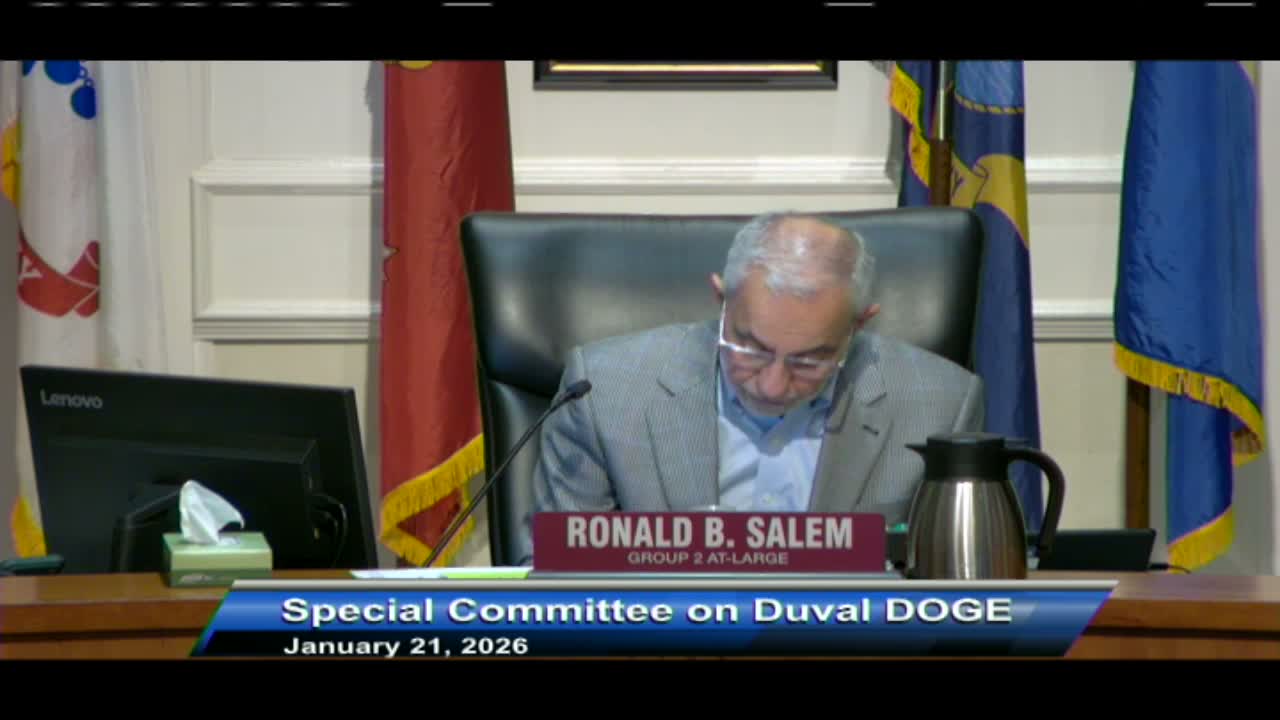
Chair Ron Salem said an ordinance to push savings immediately to PAYGO "is very attractive to me," and asked auditors and finance staff to consult on legislative language. Finance officer Anna Brochet and the city treasurer said they were already reviewing the auditor's first two recommendations and urged a citywide view of savings so funds from multiple debt portfolios are accounted for before any transfer.
Taylor said preliminary quarterly summaries suggest roughly $10 million in total savings for the city, with about $2.2 million in the citywide/non-departmental bucket; she cautioned that final calculations were pending. The committee asked for follow-up data and signaled interest in including a recommendation on reserves and debt-savings routing in the Doge final report to the council.
No formal ordinance was introduced at the meeting; members discussed drafting language for future legislation.