Get Full Government Meeting Transcripts, Videos, & Alerts Forever!
Get email alerts on the Appointments topic
No spam. Unsubscribe anytime.
Rules committee seeks written counsel opinion amid debate over appointment powers
Summary
Council members debated a bill to shift appointment authority for certain boards and asked the Office of General Counsel for a written advisory (and to clarify whether a binding opinion is possible). Jason Teal cited a 1968 Durden advisory opinion and City of Jacksonville v. Bowden (1914) in the legal history of appointment powers.
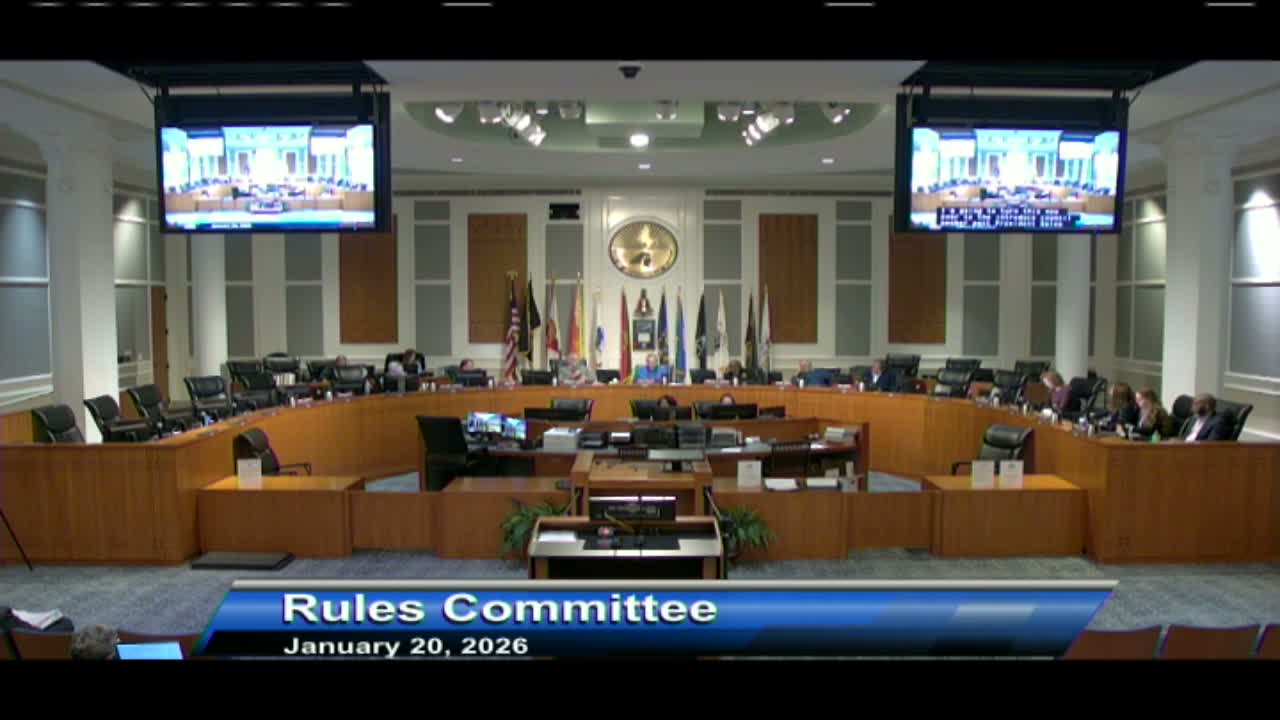
Council members spent an extended portion of the Rules Committee meeting debating which branch — the council or the mayor — holds the authority to appoint members to certain boards and whether the committee should await a written legal opinion before taking a final vote.
Jason Teal, legislative council, summarized earlier legal work: "I suggested the provision in section 4.02 of the charter" as one path to resolve disputes and noted a 1968 advisory opinion by William Durden concluded that assigning duties to judges could raise separation‑of‑powers concerns. He also cited City of Jacksonville v. Bowden (1914), a Florida Supreme Court case that earlier upheld a referendum enabling council appointment authority.
Several council members asked for a written legal opinion to put the council's lawyer "on the record." The Office of General Counsel, represented in discussion by Mister Fackler, differentiated types of products: "A memorandum outlining our position is different than a binding opinion," he said, but he offered to consult his team and provide a timeline; he indicated a written advisory memorandum was feasible and suggested he could have a decision on feasibility by the end of the week and a potential two‑week delivery if the committee wanted a product.
Some members urged postponing the council vote until a binding opinion is prepared; others said asking for a binding opinion on hypothetical facts is inappropriate and that advisory opinions are the usual practice until a concrete case or controversy emerges. The committee asked the general counsel to return with an advisory opinion or memorandum clarifying its legal position before the full council vote next week.