Jacksonville reviews revisions to Public Service Grants rules; council cut maximum award to $125,000
Loading...
Summary
City staff and the PSG council reviewed Phase 1 red-line revisions to Chapter 118 of the Public Service Grants rules, emphasizing application clarifications, new disqualification language for false information, and support for smaller agencies after the Council lowered the award cap from $150,000 to $125,000.
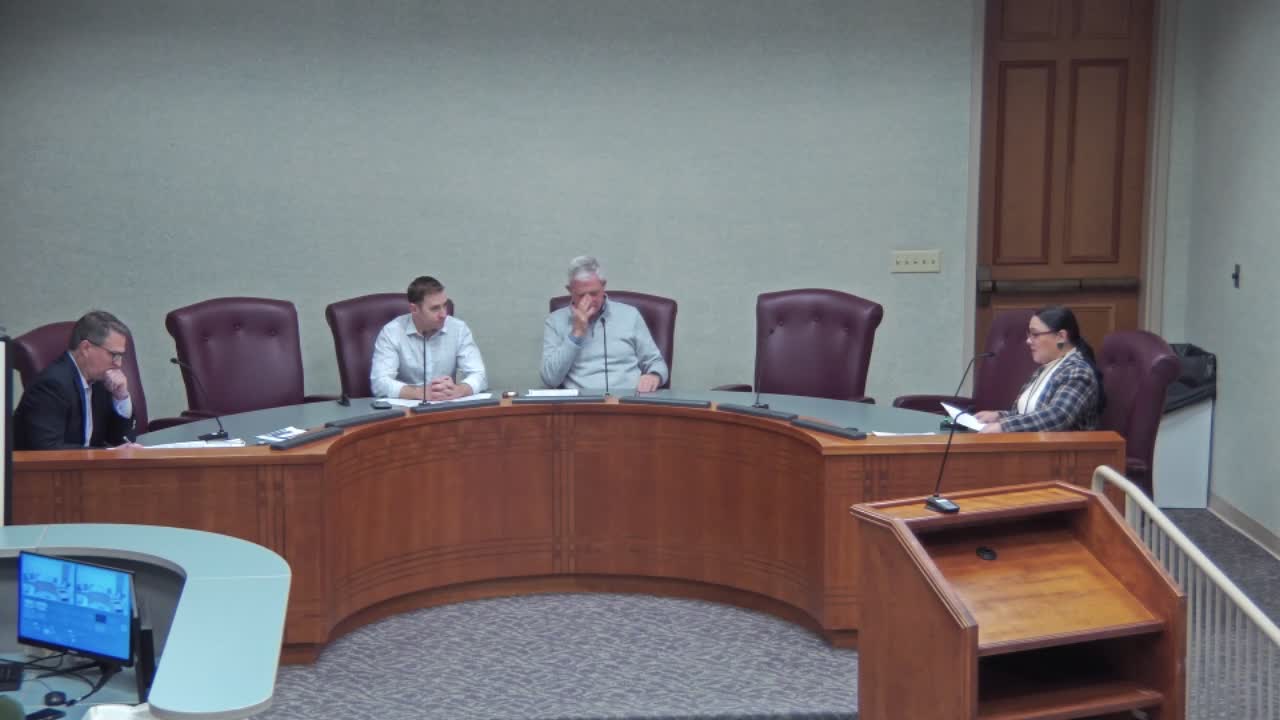
Jacksonville staff and members of the Public Service Grants (PSG) council met to review Phase 1 red-line changes to Chapter 118, focusing on procedural clarifications intended to reduce disqualifications and improve access for smaller agencies.
Maribel Figueroa, identified in the record as chief, grants and contract compliance division, summarized the two-phase approach the PSG council adopted after more than 20 hours of review. "Public service grants are certainly a living and breathing ordinance that is constantly evolving," Figueroa said, explaining Phase 1 targets critical changes needed for the upcoming grant cycle and Phase 2 will revisit other items.
Why it matters: the changes are meant to reduce routine disqualifications, streamline the online application, and codify practices that have occurred in recent cycles. Figueroa said the PSG council recommended five main revisions for Phase 1 — limit applications to one per category; add clearer wording around program management and expertise; encourage partnerships; codify PSG council approval for budget amendments over 10 percent; and update resource organization names and definitions. The City Council additionally amended the draft to lower the maximum award from $150,000 to $125,000, a change Figueroa said was not a PSG Council recommendation.
City staff described recent application data and applicant feedback. According to presenters, the FY2025 cycle received 111 applications and the subsequent FY2026 cycle received 101. For the most recent cycle, staff said 81 applications were eligible for scoring and 60 awards were made. Figueroa said a post-application survey to the PSG distribution list (nearly 900 contacts) found smaller agencies were deterred by the reduced award size and the workload required to assemble competitive applications. "They did like the one application per category," she said, but many smaller providers told staff the paperwork and staff time made applying "not worth it" at the lower award level.
Staff also reported many disqualifications resulted from simple omissions — missing balance statements, incomplete financial forms, or not providing three years of tax returns. To reduce these technical disqualifications, the red-line clarifies which fiscal-year documents are required, states that extensions are not acceptable in lieu of completed forms, and allows for a board or governing-body letter for agencies exempt from a charitable solicitation permit.
The red-line also adds language giving the grant administrator explicit authority to prescribe alternate submission methods if the online grant management system is down, and it adjusts the online form to include character counts (while keeping page counts for a paper option). Figueroa said staff will enhance applicant support with more-detailed orientations and workshops and will provide data from stateofjackson.org to help applicants align proposals with local ZIP-code needs.
Office of General Counsel comments: Ashley Smith of the Office of General Counsel said OGC worked closely with the PSG council through both phases and provided counsel on multiple proposals. As an example of a recommended restraint, Smith discussed an existing limit that caps a PSG award at 24 percent of a recipient's budget. "That number is not an isolated number just as it relates to PSG grants," Smith said, noting the percentage interacts with other city grant programs and the PSG council chose not to change it.
Accountability and enforcement: the red-line introduces a mechanism to disqualify an applicant who submits false information on required affidavits (for example, misrepresenting noncompliance status). Figueroa said the change fills a prior enforcement gap.
Scoring and committee procedures: the draft clarifies that each application will be scored by a minimum of three PSG council members, that scorers are drawn randomly consistent with PSG bylaws, and that Section 6 (scoring criteria) receives additional definition to reduce scorer uncertainty.
Next steps and public comment: red-line copies were made available for review and the council scheduled an additional noticed meeting. The liaison opened the floor for public comment but recorded no substantive objections; the meeting was adjourned early.
What was not decided: the PSG council did not adopt a prescriptive rubric for scoring applications. PSG members said the council and prior city-council guidance favor member judgment based on experience rather than a rigid scoring rubric. The FY2026 changes implementing the five PSG recommendations — plus the City Council's reduction of the award cap to $125,000 — are the principal outcomes in this phase.
Reporting note: numbers and fiscal years are those stated in the meeting record; where speakers used shorthand (e.g., "20 25"), the article reports them as FY2025 and FY2026 as presented in the transcript.