Get Full Government Meeting Transcripts, Videos, & Alerts Forever!
Get email alerts on the Labor Policy topic
No spam. Unsubscribe anytime.
Committee reports substitute for HB 5 expanding paid sick leave; opponents cite litigation and preemption concerns
Summary
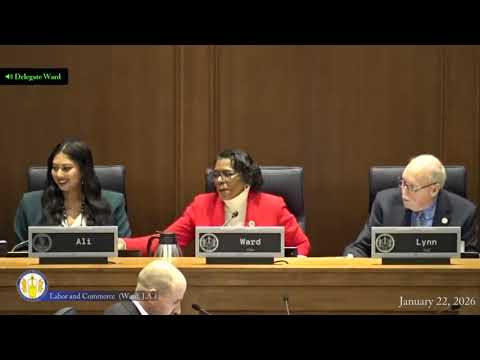
HB 5 would establish up to five paid sick days per year for most employees; the committee reported a substitute with amendments and referred it to Appropriations by a 5–2 vote after extensive testimony from labor groups, small business associations, airlines and industry.
The Commerce subcommittee reported a substitute for HB 5, a bill to extend paid sick leave broadly across Virginia, setting a baseline of five paid sick days per year and establishing accrual rules.
Delegate Fowler presented amendments and the substitute, which added provisions for relief workers and an assumed 40‑hour workweek for certain categories of employees. Supporters — including SEIU, Care in Action, faith groups and small business coalitions that voluntarily pay living wages — said paid sick leave improves public health and worker stability. Testimony cited that 41% of private sector workers lack paid sick days and argued the policy reduces turnover and limits disease spread.
Opponents raised concerns about litigation exposure, double damages and enforcement mechanisms, as well as potential federal preemption for airlines and related industries. The Virginia Chamber of Commerce and retail industry groups urged amendments to limit civil penalties and provide employer protections; airline representatives flagged statutory preemption issues and ongoing litigation in other states.
After hours of testimony and discussion, the subcommittee moved to report the substitute with amendments and referred the measure to Appropriations by a recorded vote of 5–2.
Because the bill contains enforcement provisions and potential budget implications for state and local entities, supporters and opponents indicated further work will focus on administrative remedies, funding for compliance, and clarifying preemption concerns for federally regulated industries.