
Working‑group bill H.540 would clarify reparative program referrals, add sentencing factors and standard forms
Get AI-powered insights, summaries, and transcripts
Subscribe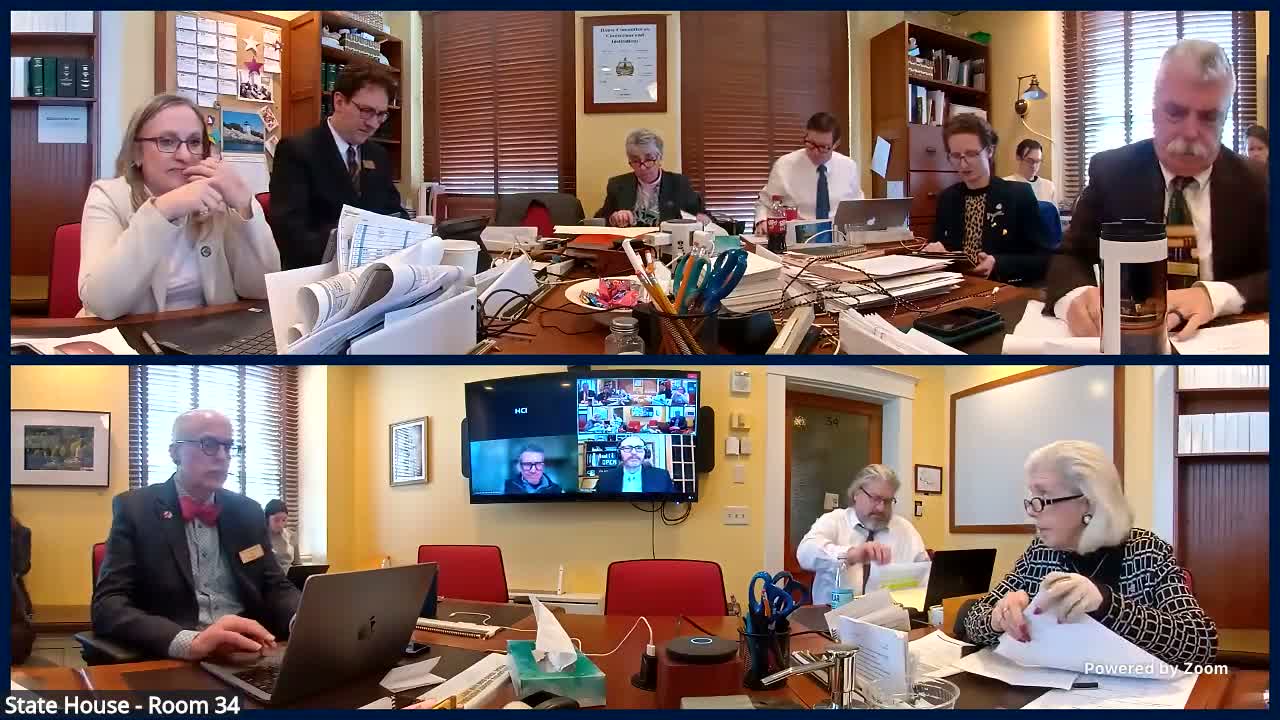
Summary
Chief Judge Tom Zona and Department of Corrections staff told the committee H.540 consolidates reparative/referral language across statutes, makes referrals clearly available as stand‑alone sentences (not only probation conditions), adds nonexclusive factors for judges to weigh, and proposes standardized referral forms; the committee will consult the Judiciary Committee before any final vote.
Judge Tom Zona, acting as chair of a legislatively created working group, told the House Corrections & Institutions committee that H.540 represents the group’s consensus to simplify and clarify how referrals to reparative programs are authorized and used. "It's a bill that adds clarity, adds predictability, adds equal access," Zona said, explaining that the bill relocates and consolidates existing statutory language so courts and community justice centers use a single reference point for reparative referrals.
The bill makes three practical changes emphasized by the working group: it clarifies that a referral to a reparative program can be imposed as a stand‑alone sentence (not requiring probation supervision); it lists nonexclusive factors judges should weigh when imposing a reparative sentence (including victim input, impact on the community, offender willingness and capacity to participate, and existing protective orders); and it requires standardized referral forms for use across Community Justice Centers (CJCs), with an option for the Supreme Court to adopt procedural rules if needed.
Zona and working‑group members said the drafting reflects input from state prosecutors, defense attorneys, CJCs, the Department of Corrections (DOC), and victim‑service organizations. He told lawmakers that the provision on procedural rules is permissive (a "may") and that rule adoption would be a months‑long process involving public comment if pursued. The working group reported no budget request tied to the changes; presenters and committee members characterized the fiscal impact as minimal.
Derek (DOC), identified in the record as the community and restorative justice executive, said the product was consensus driven and that DOC supports the operational approach. "I have full confidence in the bill for what we were charged with doing," he said.
Committee members welcomed the clarity but asked the chair to consult with the Judiciary Committee before any final committee vote because the bill touches sentencing practice (outside this committee’s primary jurisdiction). If the Judiciary Committee and the bill sponsor raise no concerns, the Corrections & Institutions committee indicated it would consider a vote in the coming days.