Get Full Government Meeting Transcripts, Videos, & Alerts Forever!
Get email alerts on the Housing And Place topic
No spam. Unsubscribe anytime.
Commission discusses ADU reforms, accessory building standards, trails signage and senior housing priorities
Summary
Commissioners reviewed earlier ADU drafts and debated size limits, owner-occupancy, basement-apartment limits and flag-lot treatment; they also raised concerns about tall corrugated accessory buildings, inconsistent fence materials, trail safety signage and the need for more senior/memory-care beds.
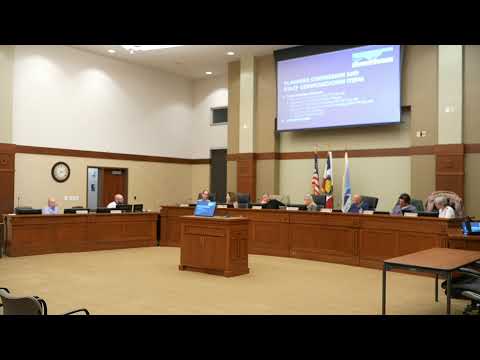
The Highland Planning Commission spent a large portion of the meeting reviewing staff-proposed topics for the coming year and discussing housing and neighborhood concerns, with a detailed exchange about accessory dwelling units (ADUs) and related development standards.
Commissioners said the commission should revisit its prior ADU straw proposal. The group discussed removing an awkward "breezeway" workaround, defining detached ADUs, and requiring one of the dwelling units to be owner-occupied. Size limits prompted debate: examples ranged from 750 to 1,600 square feet, with one commissioner noting 1,000 square feet as a livable reference for a detached unit. Commissioners also sought to prevent three independent dwelling units on a single lot: "You can't have 3 dwelling units," one participant said, and members agreed the city should generally allow either a detached ADU or a basement apartment but not both.
Commissioners distinguished ADUs from accessory non-livable buildings (garages, sport courts and large corrugated shops). One commissioner described seeing tall corrugated metal structures close to property lines that block neighbors' views and sunlight and said they appear industrial; the commission discussed whether separate rules for accessory buildings should be added to address aesthetics and corner-lot visibility.
On neighborhood amenities and safety, commissioners raised trail wayfinding and a local risky right-angle turn where a cyclist was injured. A commissioner urged simple signage—examples included "slippery when wet"—and the chair suggested exploring external resources for trail markers or painted guidance to make trails easier to follow.
Commissioners also flagged a local shortage of senior housing and memory-care options, noting residents frequently must go to neighboring cities for care. Staff said the city already has a senior-care/assisted-living overlay zone written for a single facility and suggested broadening that overlay or creating clearer, citywide provisions to make Highland more attractive to senior-housing developers.
Next steps: Commissioners asked staff to circulate existing ADU drafts and to bring iterative proposals back for more detailed discussion; they also asked staff to explore practical trail-signage options and to examine stricter fence and accessory-building standards for major thoroughfares.