Bill would limit diminution credits for violent offenders, sponsors say it ensures 'meaningful' sentences
Loading...
Summary
Senate Bill 105 ("Jerry's Law") would cap or restrict diminution credits for those convicted of first and second degree murder and other violent offenses, shifting early release decisions to the parole commission and reducing automatic sentence reductions, proponents said; opponents warned it would remove incentives for good behavior and increase prison safety risks.
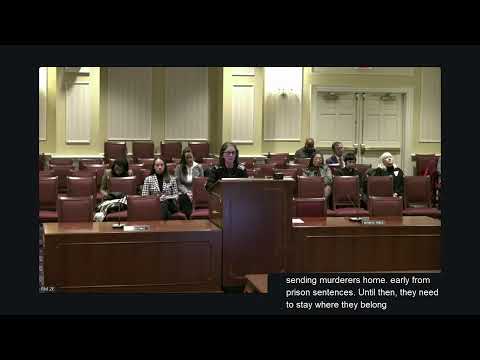
Senators Faulden and McKay presented SB 105, which would limit the application of diminution (good‑time) credits for individuals convicted of serious violent offenses so that sentences imposed by judges more closely reflect the time served. Prosecutors and victims' family advocates, including Linda Duncan, supported the bill as a way to ensure sentencing has meaning for families of victims.
Assistant State's Attorney Carrie Borzulleri told the committee that restricting or eliminating certain automatic credits for first and second degree murder would permit the Maryland Parole Commission to handle early release decisions based on risk assessments and rehabilitative progress rather than an automatic reduction. Proponents argued the change would avoid situations where high‑harm offenders are released far earlier than the original sentence implied.
Opponents—including formerly incarcerated advocates and the Office of the Public Defender—testified that diminution credits promote good behavior, reduce violence in facilities, and provide incentives for rehabilitation. They cautioned that removing credits without robust alternatives could worsen institutional discipline and endanger staff and incarcerated people.
Senators discussed possible alternatives, including redirecting credits to in‑custody programming rather than outright elimination. The hearing closed with sponsors receptive to amendment proposals.