
MDOT seeks to remove emergency-rule requirement for overweight port-corridor routing (SB 149)
Get AI-powered insights, summaries, and transcripts
Subscribe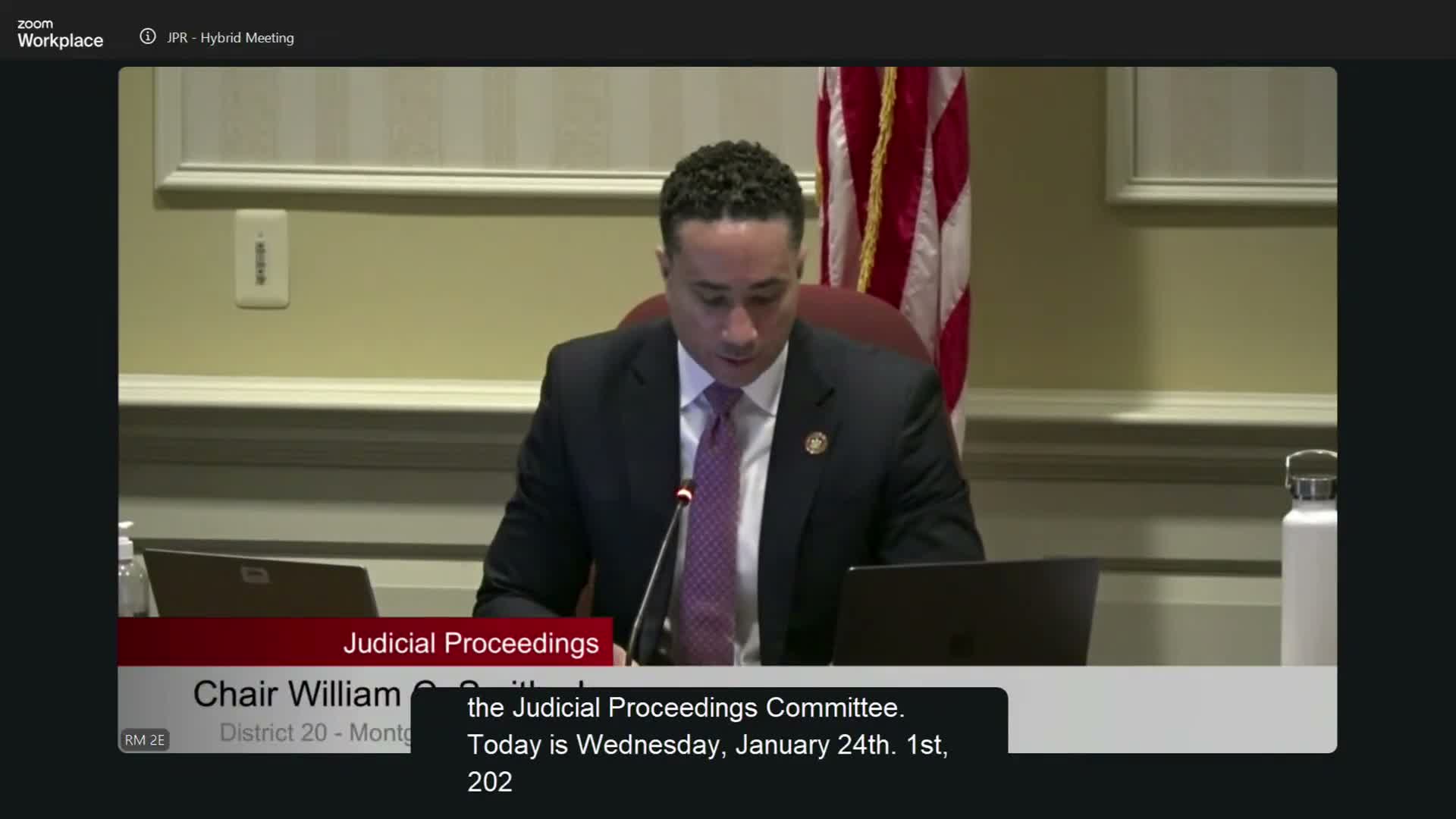
Summary
MDOT officials told the Judicial Proceedings Committee that Senate Bill 149 would let the State Highway Administration reroute overweight freight more quickly by eliminating a statutory requirement to adopt emergency regulations, reducing delays they say now can take up to six months and improving safety and freight flow around the Port of Baltimore.
Maryland State Highway Administrator Will Pines told the Judicial Proceedings Committee on Jan. 21 that Senate Bill 149 would repeal a statutory requirement that MDOT adopt emergency regulations to change routing for overweight vehicles operating under the Heavyweight Port Corridor permit. Pines said the removal would let SHA update permitted routes rapidly through its Maryland 1 permitting system, cutting administrative delays that he said previously stretched as long as six months.
"Eliminating the need for emergency regulations will provide SHA with additional flexibility to change routes through the Maryland 1 permitting routing system, which can be updated in a matter of seconds," Pines said, adding the change would allow freight to reroute during emergencies and improve safety because haulers would not be forced onto roads or bridges without active work zones.
Pines and Dwayne Pierce of SHA's motor-carrier division cited the Francis Scott Key Bridge collapse as an example when routing changes were necessary and the emergency-regulations process delayed responses. Lewis Campion of the Maryland Motor Trucking Association added on the record that the bill "doesn't open up any new roads" but gives the agency flexibility during emergencies.
Proponents said the bill does not override local road restrictions and that MDOT coordinated with port and trucking stakeholders on the proposal. The committee did not ask substantive questions during the hearing and concluded testimony after proponents finished.
The committee moved on to its next bill after hearing from SHA; there was no recorded formal vote on SB 149 during this session.