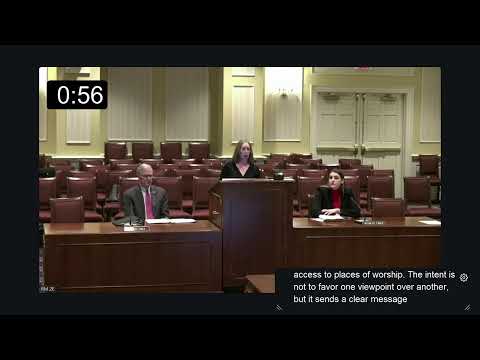
Family members and MADD press for mandatory breath and blood testing after fatal crashes
Loading...
Summary
Family members of a crash victim and Mothers Against Drunk Driving urged the Judicial Proceedings Committee to pass 'Mateo's Law' (SB110), which would require immediate breath and blood testing for drivers involved in crashes that cause death or life‑threatening injury. Senators asked for clarity on drug‑impairment standards, especially THC.
Senator Nick Charles presented SB110, "Mateo's Law," saying mandatory on‑scene chemical testing after crashes causing death or life‑threatening injury would ensure timely evidence preservation and improve accountability. Cheryl (Sherrell) Green testified about the 2024 crash that killed her 20‑year‑old son Mateo and described delays and outcomes she called inadequate. Mothers Against Drunk Driving (MADD) and other advocates urged passage.
"No sobriety or impaired testing was administered at the scene," Green told the committee. "Mateo's law would require mandatory on the scene impairment testing for any driver involved in a crash resulting in death or serious bodily injury. Justice should never depend on the discretion of a responding officer or the subjective judgment of EMTs."
Committee members supported the victim perspective but repeatedly flagged technical challenges: there is no universally accepted blood‑level impairment standard for THC comparable to a 0.08 BAC for alcohol. Senators asked the sponsor to consider clarifying language on immediate testing protocols, and whether field sobriety assessments should be used alongside chemical testing. The sponsor said he would accept an amendment to require testing "as directed by the police officer" and to explore technology and standards for drug impairment.
Next steps: sponsor agreed to refine language to emphasize immediate testing and to consult with public safety and forensic experts on drug‑impairment thresholds.