Subcommittee advances HERC package adding IVF, hearing aids and fertility preservation to Virginia's EHB benchmark
Loading...
Summary
The House subcommittee reported HERC's essential health benefits update (HB327/HB328) to Appropriations after amendments: the package adds fertility diagnosis and treatment (including up to three assisted reproductive technology cycles), hearing aids for all ages, donor breast milk and other items; supporters praised the changes while faith‑based groups raised conscience concerns.
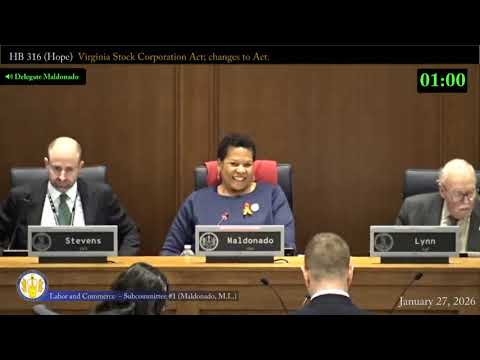
A House Labor and Commerce subcommittee on Wednesday reported HERC’s recommended updates to Virginia’s essential health benefits (EHB) benchmark and referred the package to Appropriations.
Delegate Sullivan, speaking for HERC, said the package reflects extensive committee work and stakeholder consultation: "What you have before you is the culmination of that work," he said, urging the panel to move the changes forward. The proposal would add doula care, diagnosis and treatment of infertility, fertility preservation, a lifetime cap of up to three assisted reproductive technology cycles, hearing aids for people of all ages, pasteurized donor human breast milk and certain pediatric treatments to the state’s benchmark plan.
Why this matters: patient advocates and clinical groups said the updates fill longstanding coverage gaps that force families to pay out of pocket or delay care. Rebecca Flick of Resolve and Kelly Fitzgerald of Blood Cancer United testified that fertility preservation and IVF coverage can be medically necessary for patients facing cancer or other conditions that threaten future fertility. "This will transform lives in the Commonwealth," Flick said.
Opposition and process concerns: faith‑based groups (Virginia Catholic Conference, Family Foundation) raised conscience and religious‑liberty concerns about mandated IVF coverage and urged accommodations; plan representatives and the Virginia Association of Health Plans noted process constraints, defrayal concerns and CMS timing issues for new EHB requests. Staff and counsel handled several late amendments including plan‑year timing adjustments; the committee accepted amendments and reported the package to Appropriations by a committee vote.
Next steps: the referral to Appropriations will focus on fiscal implications and timing; sponsors said they expect implementation to align with federal approval timelines and the state’s next plan year.