
Subcommittee advances bill allowing WMATA to seek authorization for advertising on parking garages, with request for Virginia revenue reporting
Get AI-powered insights, summaries, and transcripts
Subscribe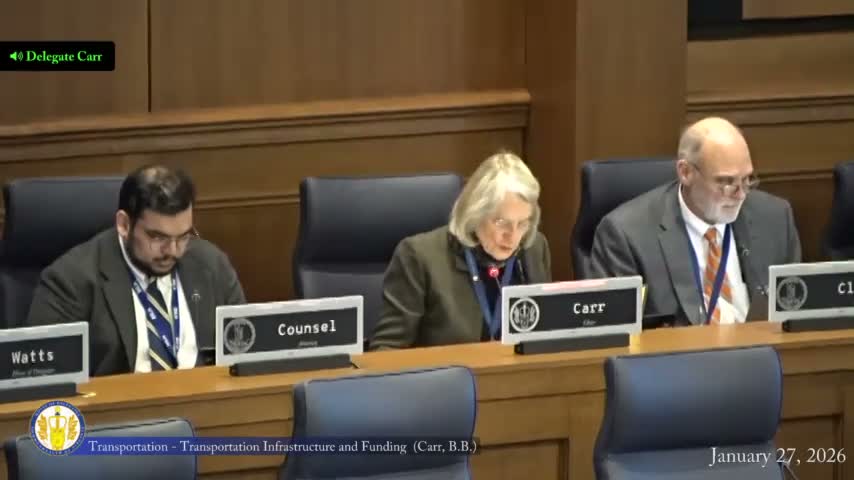
Summary
Members advanced a substitute for HB 330 to allow WMATA to seek federal and state authorizations to place advertising on WMATA facilities in Virginia; members added a friendly amendment asking for revenue reporting disaggregated to the Commonwealth where possible.
A House transportation subcommittee heard testimony on HB 330, a bill that would permit the Washington Metropolitan Area Transit Authority (WMATA) to begin engaging federal, state and local authorities to seek authorization to place advertising on WMATA assets located in Virginia, such as parking garages that face interstate highways.
Sponsor and revenue projection: Delegate McClure said the change would allow WMATA to pursue revenue opportunities and, if fully authorized across government levels, WMATA could generate nearly $8 million in additional revenue. Dave Albo and a WMATA representative described the proposal as a way to create non‑taxpayer revenue without additional taxpayer expense.
Amendment: A committee member proposed a friendly amendment requiring WMATA to report revenues generated by the program, with language added asking for disaggregation to the degree possible for revenues raised in Virginia, to avoid presenting a systemwide tally that would include Maryland and D.C. WMATA counsel indicated the agency would provide such information if requested.
Federal and local approvals: Counsel for WMATA and other witnesses noted that advertising visible from federal highways would require federal approval or waiver, and county/local approvals would still be required in many locations.
Committee action: The committee temporarily took the bill to adjust language and then reported the substitute. The chair announced the bill passed in subcommittee and will proceed to the next stage.