Senate Privileges & Elections committee advances slate of elections bills, hears three gubernatorial nominees
Loading...
Summary
The Senate committee heard three administration nominees and considered a wide range of elections bills — from ranked-choice voting and Sunday voting to a 90-day quiet period for voter-roll maintenance. Several measures were reported to the floor while others were carried over for further study.
The Senate Privileges and Elections Committee met in Richmond on Jan. 28 to consider gubernatorial nominees and a dozen election-related measures ahead of the 2026 legislative session.
The panel heard introductions from three executive-branch nominees. Monique King, nominated for secretary of the Commonwealth, outlined plans to streamline restoration-of-rights procedures and highlighted the office’s role in appointing members to more than 4,000 boards and commissions. Tracy DeShazer, the governor’s nominee for secretary of administration, described oversight of five agencies including the Department of Elections and vowed to modernize systems and strengthen workforce capacity. Steve Koski, the nominee for Commissioner of Elections, pledged nonpartisan administration and increased outreach to local registrars.
Committee action and votes: the committee handled a busy docket of bills and recorded the following outcomes (motions and tallies reflect recorded committee action):
- SJ60 & SJ61 (gubernatorial appointments): moved to report as a block; recorded vote: yes 13, no 0, abstentions 1; outcome: reported to the floor.
- SP311 (constitutional amendment ballot language for marriage equality): committee adopted a substitute clarifying ballot text and moved to report the substitute; outcome: reported to the floor.
- SB65 (reclassify deputy positions at Department of Elections as civil-service staff): sponsor presented the proposal as an alternative to changing how the commissioner is selected; the committee voted to carry the bill over for further study (motion passed).
- SB176 (allow and regulate ranked-choice voting for local jurisdictions, include towns, and remove sunset): sponsors described technical fixes and implementation standards; public testimony included supporters (League of Women Voters, Upvote Virginia, municipal groups) and opponents who called RCV confusing and costly. Committee vote: reported to the floor (recorded tally: yes 8, no 5, 1 abstention).
- SB202 (require special elections to fill local vacancies rather than civic appointments): sponsor framed the change as expanding democratic choice; municipal associations opposed citing cost and charter conflicts. The committee voted to carry the bill over for more study (motion passed).
- SB126 (five-day filing extension for primaries when an incumbent withdraws late): sponsor said the extension levels the playing field; committee voted to report the bill to the floor.
- SB438 (two Sundays of early voting, 11 a.m.–5 p.m., included in 45-day early voting period): committee voted to report the bill to the floor after testimony on varying local experiences and costs.
- SB350 (allow limited processing of absentee and early ballots on election day to shorten tabulation time): sponsor and registrars cited surveys supporting earlier processing; committee reported the bill to the floor.
- SB277 (10-foot restricted zone and signage protections for curbside voting): sponsors and registrars supported stronger protections; sponsor asked to pass the bill by temporarily to improve language.
- SB88 (count civilly committed residents at last known residential address for redistricting): sponsor cited alignment with Code §24.2-314 and local support; committee moved and reported the bill.
- A cluster of election-security measures (including SB526 identity-affirmation changes and SB544 photo-ID proposals) drew split testimony. SB526 drew objections from the League of Women Voters concerned about additional identification burdens; proponents cited specific cases of misattributed votes. SB544’s sponsor described provisional-ballot safeguards and free ID options; opponents warned of disenfranchisement risks. Committee actions included substitute motions to carry or refer some measures for further work.
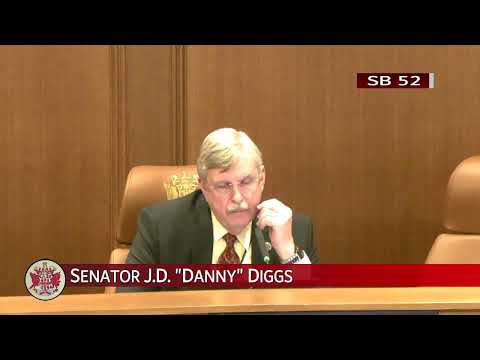
- SB52 (90-day quiet period on systemic voter-roll purges and expanded cure/response windows): sponsor framed the bill as protection against last-minute purges that remove eligible voters; the League of Women Voters, New Virginia Majority and multiple civic groups supported the bill, while some speakers and senators cautioned it could delay removal of ineligible registrations. The committee reported SB52 to the floor.
Why it matters: the committee’s action advances several bills that could change how Virginians vote and how localities run elections — from expanding access to RCV and Sunday voting to tightening or changing verification and purge rules. Several measures were carried over for additional drafting or fiscal study, reflecting practical concerns about implementation and local capacity.
What’s next: reported bills move to the full Senate docket for consideration. Carried-over bills will be revisited in subcommittee or at subsequent hearings for amendment or further study.