Get Full Government Meeting Transcripts, Videos, & Alerts Forever!
Get email alerts on the Settlement Funds topic
No spam. Unsubscribe anytime.
Adrian outlines proposed household repair reimbursement from Crimson Holdings settlement
Summary
City staff proposed a $50,000 household repair reimbursement program using part of the Crimson Holdings settlement, offering either $500 or $300 maximum per household for eligible residents who lived inside the defined boundary during the incident period; commissioners raised verification, boundary and fraud‑prevention concerns and asked staff to refine eligibility and map.
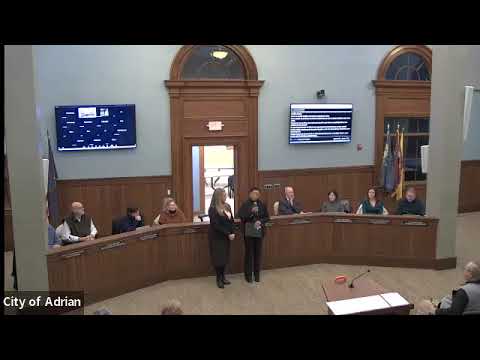
Community Development Director Lisa Hewitt Cruz proposed a streamlined household repair reimbursement program for residents impacted by odor problems tied to Crimson Holdings operations. City staff said Adrian has received $50,000 of a $100,000 settlement award and is seeking direction on how to distribute those funds to affected residents.
Under the proposal, the city would disperse $50,000 in reimbursements using one of two maximums: $500 per household (serving up to 100 households) or $300 per household (serving about 166 households). Applications would require proof of residency during the incident period and valid receipts for repair expenses, and would be accepted until funds are exhausted or until a deadline the staff set as May 1, 2026. Lisa said the application portal and paper forms will be available and that payments will be issued by paper check; staff expects processing to take under 60 days on the front end.
Commissioners pushed staff on key design choices: the incident period per the consent judgment was cited first as Dec. 1, 2022–Jan. 18, 2023, but Lisa clarified the covered period later in discussion as Dec. 1, 2022–July 18, 2023, explaining that the later end date reflects the full period covered by the consent judgment and subsequent ownership change. Commissioners raised three recurring concerns: whether preapproval should be required to prevent fraudulent or ineligible claims; the administrative burden on city staff to verify compliance; and whether reimbursement could inadvertently pay for items that violate city code (for example, plantings that violate local ordinance). Commissioners asked staff to consider a simple verification step (photo of completed work and code‑check) and to map boundaries clearly so residents know whether they are eligible.
Lisa told the commission tenants are eligible if they lived in an affected property during the incident period and that non‑owner occupants can apply. She said staff would bring back a clarified boundary map and refined procedures, and commissioners signaled a preference for the $300 maximum so more households can benefit immediately with the option to reassess after the initial round of applications.
What’s next: staff will refine the eligibility boundary and application processes, include basic verification steps to reduce fraud risk, and return with a draft resolution and map for commission consideration. (Quote: Lisa Hewitt Cruz: “Applications accepted until funds are exhausted or deadline reached, which will be 05/01/2026.”)