Get Full Government Meeting Transcripts, Videos, & Alerts Forever!
Get email alerts on the Roads Infrastructure topic
No spam. Unsubscribe anytime.
City engineer explains chip-and-fog seal as cost-saving road-preservation strategy
Summary
City Engineer Matt Tomazewski told the Adrian City Commission chip-and-fog sealing is a preventative maintenance method that typically extends pavement life 5–7 years, costs about $31,000 per mile versus roughly $2.5 million for full reconstruction, and reduces the share of poor-rated streets when applied proactively.
City Engineer Matt Tomazewski gave an educational briefing on chip-and-fog seal, describing it as a preventive pavement-maintenance technique intended to preserve the asphalt surface and protect the expensive base beneath.
Tomazewski explained the basic steps—applying a binder, spreading aggregate (chip), then applying a fog seal emulsion to lock the surface—and said the treatment generally lasts about five to seven years and is less disruptive and far less costly than reconstruction. He told the commission the city maintains about 73 miles of streets and estimated chip-and-fog costs at about $31,000 per mile while full reconstruction was quoted at about $2,500,000 per mile; using the preservation approach on example streets, he said, can save roughly $400,000 per mile compared with immediate reconstruction.
Commissioners and residents asked about repeat applications, quality-assurance differences across neighborhoods, loose stone and bike safety, and how the city determines when a street requires reconstruction instead of preservation. Tomazewski described tools the city uses—site assessments, soil borings to test base condition, mill-and-resurface decisions, and a newer base-stabilization method that can extend pavement life similar to reconstruction at roughly half the cost.
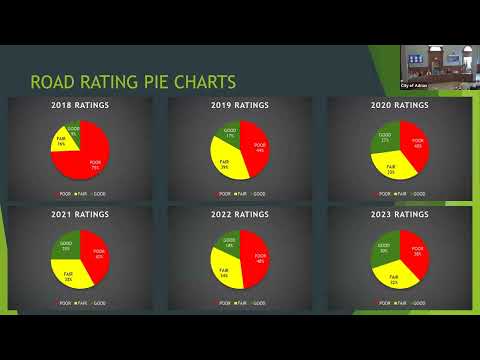
Tomazewski also described operational details: contractors leave treated streets open to traffic for 2–3 weeks so stone packs down; crews conduct street sweeping to remove excess loose stone; and the city has tested the approach since reintroducing chip-and-fog in 2016 and reported an improvement in condition ratings from a high percentage of poor streets in earlier years to 29% poor in the most recent assessment.
The presentation closed after commissioners thanked Tomazewski and discussed next steps for preserving city pavement.