
Committee debates Turnpike pilot for automated speed enforcement in work zones amid privacy and implementation questions
Get AI-powered insights, summaries, and transcripts
Subscribe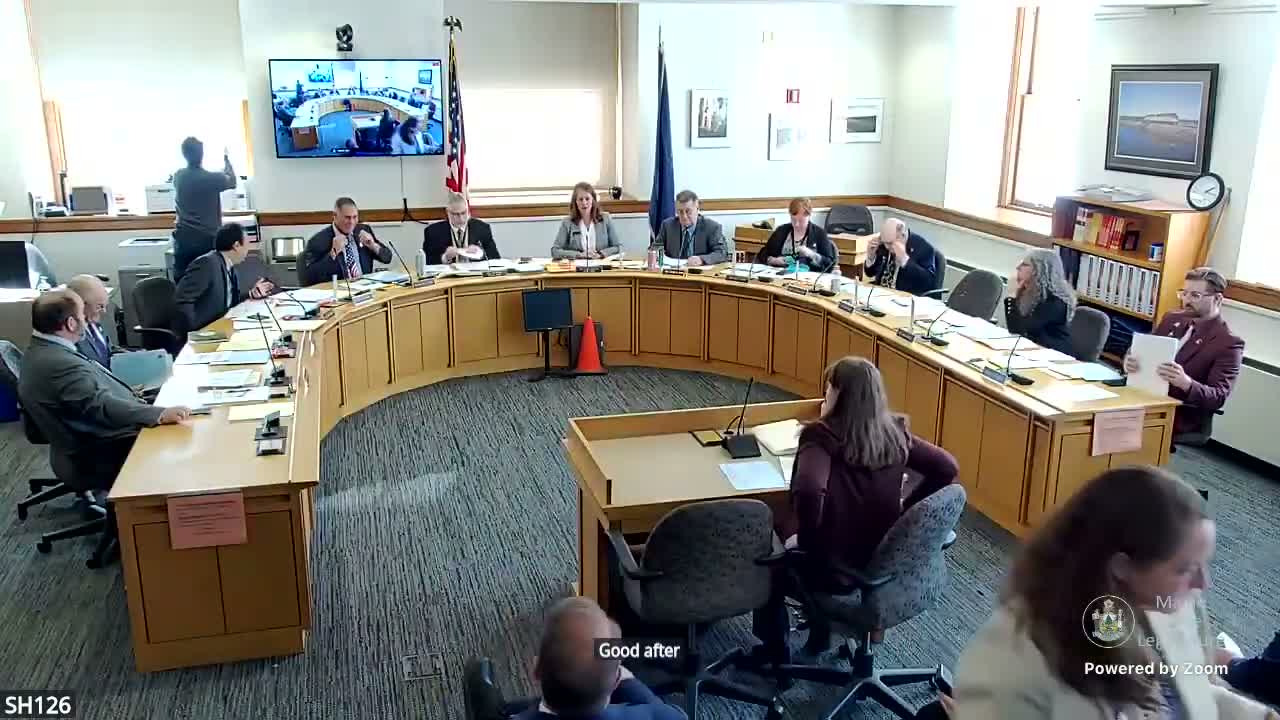
Summary
A sponsor's amendment to LD 1457 would authorize a three‑year pilot letting the Maine Turnpike Authority operate automated speed enforcement in work zones with a warning period, a minimum 11 mph enforcement threshold, a flat $100 penalty on a second violation, and privacy safeguards; the committee tabled the measure to refine vendor, data retention and appeals language.
At a Jan. 27 work session the Joint Standing Committee on Transportation considered a sponsor's amendment to LD 1457 that would authorize the Maine Turnpike Authority to run a time‑limited pilot program testing automated speed enforcement in highway work zones.
Andre Brere, executive director of the Maine Turnpike Authority, described the amendment as a targeted, three‑year pilot intended to improve worker safety. He said the program would be limited to work zones with workers present, allow up to three active enforcement sites at a time, and begin with an outreach and pre‑enforcement warning period. "It is a 3 year pilot program to allow us to do 2 construction seasons worth of this test," Brere said. "Not intended as a revenue generating program." He said MTA would publish site locations and deploy conspicuous signage that reads, "photo enforcement ahead."
Under the sponsor's amendment the enforcement threshold would be at least 11 miles per hour above the posted speed limit; the language permits the authority to set a higher threshold. During a pre‑enforcement period the authority would send warnings; only after a second violation for the same vehicle (with a minimum 14‑day spacing) would the owner be assessed a $100 flat penalty. The amendment directs that recorded images be destroyed a short time after final adjudication unless needed for enforcement or judicial order; MTA staff proposed retaining images no longer than 30 days after final adjudication and offered independent audits and privacy safeguards.
Committee members raised implementation questions about signage, the length of the warning period (several members supported a minimum 90‑day public notice period before tickets are issued), vendor selection and data custody, whether the authority or a vendor would review images, and how collections or nonpayment would affect in‑state and out‑of‑state registrations. Brere said the authority can require RFP terms that keep data under MTA control and that vendors would be contractually restricted from profiting per‑notice; he also said MTA would work with privacy groups and provide independent auditing.
Alicia Ray, policy fellow at the ACLU of Maine, testified in opposition and urged caution, citing litigation histories and operational failures at some automated‑enforcement vendors and warning that third‑party audits do not eliminate the risk that large license‑plate datasets can be misused or breached. "Our opposition to this resolve remains," she said, and described concerns about long‑term retention, data sharing and due process for owners who receive notices.
MTA staff and the sponsor said the proposal is a pilot intended to collect data and that the authority would report back to the committee and the legislature on outcomes and recommended changes. After extended discussion the sponsor moved to table the measure to allow additional drafting and to return with clarified language on notifications, data custody, appeals and implementation; the motion to table was seconded and approved by the committee members present. The committee adjourned following the vote.
Next steps: The sponsor and MTA will refine the amendment language and return the revised version to the committee for further consideration; a formal RFP and administrative rulemaking would follow any enacted pilot authorization.