
Judiciary committee asks staff to draft bill removing limits for aggravated trafficking, commercial sexual exploitation
Get AI-powered insights, summaries, and transcripts
Subscribe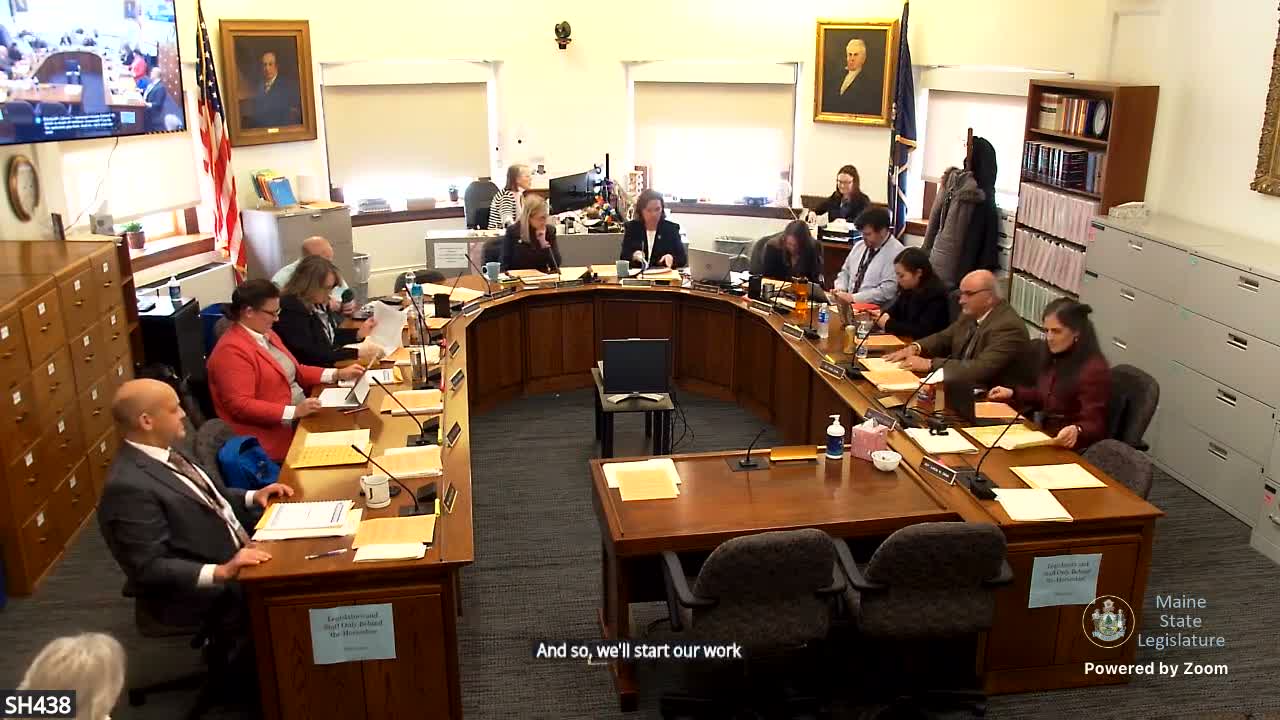
Summary
The Criminal Law Advisory Commission told lawmakers that gaps and inconsistent placement in Title 17‑A have left aggravated trafficking of minors and commercial sexual exploitation of a minor treated differently from other crimes against children; the committee authorized drafting legislation to remove limitation periods for the two offenses and to clarify effective dates.
The Joint Standing Committee on the Judiciary voted to ask staff to prepare committee legislation to remove statutes of limitation for two offenses after receiving a report from the Criminal Law Advisory Commission. The motion, made by Representative Elizabeth Caruso and seconded by Representative Danny O’Halloran, authorized printing a single bill that would (1) add aggravated trafficking against minors to the list of crimes with no statute of limitation and (2) address whether commercial sexual exploitation of a minor (17‑A §855) should be included alongside other child‑victim offenses.
CLAC chair Laura Ustach, an assistant attorney general, told the committee the study was directed by the Legislature to examine parity across Title 17‑A §8. She summarized both the legal purpose of limitation statutes — “It’s a limit on what the government can do” — and a condensed history of legislative changes since 1975, noting amendments in 1991, 1999, 2013, 2019, 2023 and 2025 that shifted age thresholds and extended windows for various offenses.
CLAC identified two discrete items for committee action. First, aggravated trafficking against minors currently sits in a 20‑year category rather than in the no‑statute‑of‑limitations category used for many crimes against children; CLAC noted that structurally that appears inconsistent and flagged it for committee decision. Second, commercial sexual exploitation of a minor (listed in the criminal code at 17‑A §855) remains subject to a six‑year limit and was called out as a statute the committee could consider moving into an extended or no‑limit category.
Members pressed staff and CLAC on effective dates and retroactivity. CLAC and legislative analysts warned that extensions cannot revive prosecutions for conduct where the prior limitation period already expired; any extension therefore must include clear “effective date” or unallocated language to specify that the change applies only to conduct occurring on or after a stated date. Committee staff said they would work to draft amendment language and, if feasible, post an amendment to clarify dates before the public hearing.
Representative Caruso’s motion to request committee legislation was approved by show of hands; staff recorded that all present supported instructing the reviser to prepare the bill. The committee instructed staff to draft the language and to prepare an amendment addressing dates for posting with the public hearing.