Committee backs amended four-day workweek pilot to use existing wellness credit
Loading...
Summary
The committee recommended reporting LD 1865 "ought to pass as amended," replacing the proposed tax credit with an incentive tied to Maine's existing wellness credit for small firms and moving administration to DECD; members raised fiscal and eligibility questions and recorded a minority "not to pass" report.
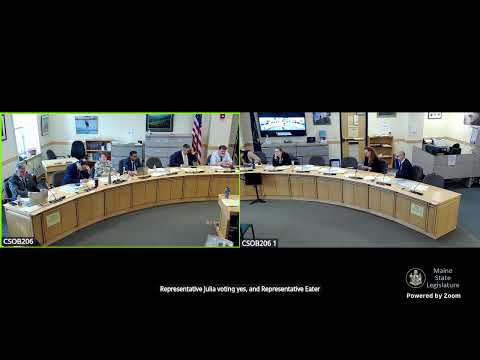
Augusta, Maine — The Legislature's joint Committee on Housing and Economic Development on Wednesday recommended that LD 1865, a pilot to incentivize adoption of a voluntary four-day workweek, be reported "ought to pass as amended." Sponsor Sen. Rick Bennett proposed replacing the bill's original tax-credit structure with the state's existing wellness tax credit for eligible small employers and shifting administration from the Department of Labor to the Department of Economic and Community Development (DECD).
Bennett told the committee the change responds to earlier concerns that the tax-credit approach was "messy and unworkable" and that working with DECD and a postsecondary partner such as the Roux Institute could allow the study to be conducted with little or no cost to the state. "It's totally voluntary," Bennett said of the pilot, adding he expected "a few dozen" companies might participate.
The amendment would make the wellness credit available during the pilot period to companies that meet the existing wellness-credit definition (currently limited to firms with fewer than 20 employees) and would give DECD permissive authority to engage an academic partner to design, collect and report study data.
Members questioned the fiscal impact and eligibility thresholds. Chair Sen. Chip Curry asked whether the bill should specify how much is already budgeted for wellness credits and what the cost to taxpayers could be; Bennett said the Office of Fiscal and Program Review (OFPR) would need to produce a fiscal estimate and that actual cost depends on how many businesses claim the credit. "I don't know the fiscal impact of that," Bennett said. DECD's Moe Terry confirmed the wellness credit is an existing tax credit for companies under 20 employees and said DECD uses such tools to incentivize business decisions.
Several lawmakers pressed for inclusivity of very small and seasonal employers; Bennett offered a friendly amendment to permit firms with fewer than 15 employees to qualify if at least 25% of their employees choose to participate. Representative Amanda Calamore recorded opposition, saying she could not support the motion without final bill language or a fiscal note.
After a brief caucus the committee recorded a recommendation with six members of those present voting in favor and several opposed; members who voted no filed a minority "not to pass" report. The recommendation is advisory pending any absentee votes by members not present. The committee closed the LD 1865 work session and moved on to other bills.
What's next: The bill will be carried forward to the next legislative steps with the committee's recommendation; OFPR is expected to produce a fiscal estimate during subsequent drafting and language review.