Get Full Government Meeting Transcripts, Videos, & Alerts Forever!
Get email alerts on the Community Choice Aggregation topic
No spam. Unsubscribe anytime.
Committee tables complex community choice aggregation bill for further stakeholder work
Summary
LD 2112, which would authorize municipal community choice aggregation (CCA) programs, was tabled after analysts flagged legal conflicts with competitive electricity provider rules, privacy and data-sharing concerns, and PUC rulemaking timelines; Representative Ferrante moved to table for further amendment work.
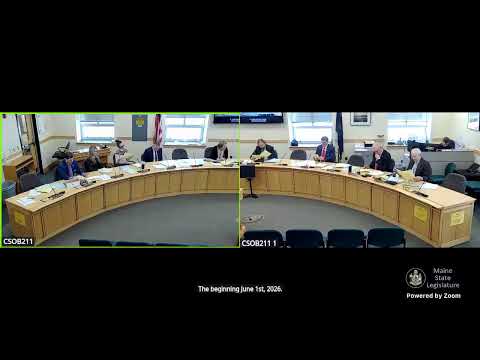
The Energy, Utilities and Technology Committee tabled LD 2112 after members heard a detailed analyst briefing that highlighted statutory, privacy and implementation issues.
Lindsay Laxon, the committee analyst, described LD 2112 as an act to permit municipalities and groups of municipalities to establish community choice aggregation (CCA) programs to procure electricity, with an opt-out enrollment model and PUC-approved plans. Laxon said the sponsor's amendment would fold "aggregators" into the definition of competitive electricity providers (CEPs), require utilities to implement purchase-of-receivables programs and consolidated billing, and set consumer-protection measures.
Laxon warned of potential statutory conflicts that could undermine an opt-out enrollment structure because existing law applicable to CEPs conditions service on obtaining a customer's authorization. She also flagged stakeholder concerns raised in testimony: whether consumer-owned utilities could participate; how low-income and electric-assistance customers would be identified without raising privacy issues; whether municipalities would be subject to public records law (FOA) if they receive individual customer data; and whether the PUC could complete rulemaking by the proposed Jan. 1, 2027 deadline.
Representative Ferrante said there are at least three salient elements to work out: protecting stakeholders from cost shifts, clarifying receivables and billing mechanics so utilities are made whole for incremental costs, and understanding impacts on standard-offer customers if many towns adopt CCAs. Ferrante moved to table the bill to allow stakeholder meetings and to craft a new amendment; Representative Webb seconded and the motion to table was approved by the committee.
What happens next: LD 2112 will be held (tabled) while sponsors and stakeholders refine language to address statutory conflicts, privacy and billing mechanics, and while the committee awaits additional stakeholder input and a revised amendment.
Sources: Committee work session transcript and committee analyst presentation.